Civic space ratings from the CIVICUS Monitor.
Every four years, the world stops to watch football.
48 nations.
Billions of people.
One shared moment that
unites us all.
Match-day insights

Mexico
Mexico co-hosts the World Cup but behind the celebrations it remains one of the world's deadliest countries for human rights defenders and journalists. Killings and enforced disappearances persist amid pervasive impunity. Authorities, corporate interests and organised crime gangs converge to create a hostile environment for those who speak up. Yet environmental defenders, investigative journalists and mothers of the disappeared are demanding accountability and institutional reforms.

South Africa
South Africa's constitution guarantees civic rights, but corruption, protest policing violations and killings of rights activists and whistleblowers are showing the gap between rights on paper and realities on the ground. Xenophobic attacks against African migrants are on the rise. Civil society champions rights, making a difference every day.

South Korea
South Korea showed how the crowd can make the difference when people protested in huge numbers to overturn martial law in 2024. As a result, civic freedoms are broadly protected and civil society is active. However, there are concerns about press freedom, the right to privacy, targeting of unions and restrictions and investigations of civil society groups working on North Korea.

Czech Republic
The Czech Republic’s civic space is rated as open, but civil society is putting up a strong defence against attempts to roll back hard-won freedoms. After a right-wing populist party won power in October 2025, tens of thousands took to the streets to protest against the influence of far-right and nationalist forces. In April 2026, a draft 'foreign agents' law was shelved after public backlash — proof that civil society remains match fit.

Canada
Canada co-hosts the World Cup and broadly protects civic freedoms, but concerns remain over protest restrictions, criminal defamation and surveillance targeting environmental and land defenders, as well as activists for Palestinian rights. Their national side might not get far in the competition, but civil society is set to go the distance.

Bosnia & Herzegovina
Bosnia pulled off an upset by qualifying for the World Cup, and its civil society brings the same tenacity to defending civic space. Activists and journalists continue to face vilification and smear campaigns, but are still finding ways to score in an increasingly hostile climate: in 2025 a restrictive 'foreign agents' law in Republika Srpska was scrapped by the constitutional court.

United States
The USA, one of three World Cup hosts, has seen its civic space downgraded to obstructed because the president won't play by the rules. Activists and protesters, particularly those advocating for Palestinian and migrants' rights, face arbitrary detention and criminalisation. Civil society funding has been slashed and freedom of expression is under threat. Civil society is pushing back loudly and in numbers, mobilising on the streets and fighting in the courtrooms.

Paraguay
In Paraguay, an increasingly hostile environment for people working on anti-corruption and transparency issues, and environmental and land rights, is putting civic freedoms under pressure. Yet activists and communities keep playing uphill, pushing back against inequality, impunity and the powerful interests behind land conflicts.

Haiti
Haiti's civil society works amid chaos and violence, without the state's protection. Gangs control territory, journalists are silenced and aid workers are attacked. Yet community networks and radio stations are the underdogs who refuse to be beaten, continuing to operate despite the risks.

Scotland
Scotland plays under UK rules — and those rules are tilting the pitch. Peaceful protesters face arrest for non-violent civil disobedience. In April 2026, it was revealed that Scottish prosecutors had received over 100 reports related to support for Palestine Action in just seven months, more than for any other group since the Terrorism Act was introduced in 2000. But civil society is playing on, fighting back in the courts and on the streets.

Australia
Australia's civic space is broadly protected, but climate and Palestine solidarity protesters face arrests, excessive force and protest restrictions when they mobilise. Anti-protest laws constain the power of the crowd but civil society continues to challenge them.

Turkey
Free speech in Turkey has been heavily eroded: the country has long had a reputation as one of the world’s leading jailers of journalists. In 2025, millions protested following the detention of Istanbul's mayor and were met with mass arrests. Despite this, civil society inside and outside the country refuses to concede defeat, and is connecting, documenting and resisting.

Brazil
In World Cup frontrunners Brazil, defending the Amazon, protecting land and exposing abuses can come at a deadly cost. Indigenous peoples, Black communities and environmental defenders face intimidation, violence and structural racism. Yet they continue to stand their ground, protecting communities and the vital rainforest.

Morocco
Lavish spending on stadiums to host the next World Cup helped trigger a Gen Z-led protest movement that won public spending commitments. But Morocco's young team of activists paid a heavy price, with thousands arrested. Authorities continue a wide-scale retaliation campaign with detentions, prosecutions and severe prison sentences.

Qatar
Qatar hosted the last World Cup, its stadiums built by migrant workers who had no right to organise, protest or speak. The world's gaze may have moved on, but international civil society refuses to be sportswashed and keeps telling the truth.

Switzerland
Switzerland's once open civic space recently slipped to narrowed amid increasing restrictions on protests and movements. Although environmental defenders in the country face prosecutions and surveillance, Swiss climate activists still scored a major win on the international stage, with a landmark 2024 victory at the European Court of Human Rights.

Ivory Coast
Côte d’Ivoire’s government doesn't play by the rules. Protests are frequently banned and protesters and activists have been jailed. A 2024 ordinace restricts the functioning of civil society organisations. Even so, a resilient civil society - with human rights groups, independent journalists, womens organisations and youth movements - keeps demanding fair play.

Ecuador
Ecuador's civic space is rapidly deteriorating. The game is becoming increasingly unfair. People defending land, water and life face extreme violence, criminalisation and punitive financial measures. Amid a security crisis and growing militarisation, communities, environmental activists, human rights groups and Indigenous peoples continue to resist.

Germany
Germany has been relegated down the civic space rankings, declining from open to obstructed following a harsh crackdown on climate and Palestinian solidarity protests. Police brutality and the criminalisation of activists have narrowed space for free expression. Yet people refuse to stay on the sidelines, with hundreds of thousands still taking to the streets.

Curaçao
Curaçao, an autonomous country within the Kingdom of the Netherlands, doesn't have its own civic space rating. But like its national team, the island’s civil society fights its own battles, working to tackle challenges such as inequality, the lack of asylum protections and the growing impacts of climate change.

Netherlands
Civic space in the Netherlands has narrowed, with climate and Palestine solidarity protests met by heavy crackdowns and proposed laws seeking to constrain civil society. Still, Dutch civil society continues to lead the line, with movements and organisations mobilising in the courts and on the streets to hold the government and private sector accountable to their human rights commitments.

Japan
Japan's civic freedoms are broadly protected, but the pitch isn't entirely clear: there are concerns about censorship and press freedom restrictions. The government has imposed tougher penalties for criminal defamation and proposed restrictive security laws that could be used to silence dissent.

Sweden
Sweden’s civic space rates highly, but there are signs of deterioration. Recent political shifts have brought funding cuts, growing hostility towards civil society and a harsher stance on protests. Civil society is pushing back, because a strong defence matters.

Tunisia
Tunisia's 2011 revolution gave birth to one of the region's most vibrant civil societies. But it's under attack because the president wants to be manager, captain and referee. He rewrote the constitution to grab power and frequently jails critics. But recent protests show that the spirit of the revolution hasn't been extinguished.

Saudi Arabia
Saudi Arabia is one of the world's worst countries for civic freedoms. Women are jailed for demanding rights. Journalists have been executed for reporting. Yet a determined diaspora keeps telling the stories that stadiums and sponsorship deals are designed to bury, because the reality of repression is bigger than the world's biggest sportswashing campaign.

Uruguay
Uruguayan civil society plays in one of the Americas' most open civic spaces. An active civil society helps keep the pitch level for everyone, showing that when people can organise freely, change is possible.

Spain
Spain’s vibrant civil society is holding strong despite civic space challenges, including criminalisation and excessive force against protests and police infiltration of movements. The infamous 2015 gag law, which restricts expression and protest rights, has penalised hundreds of thousands. But the game is far from over, and civil society continues its struggle to have the law repealed.

Cape Verde
Cape Verde may be a World Cup minnow, but when it comes to civic space it's one of the champions. It's one of only two African states where civic space is rated as open, meaning civil society can speak, organise and participate freely. A newly created National Observatory for Human Rights is tasked with providing updated human rights data and monitoring compliance with national and international committments.

Iran
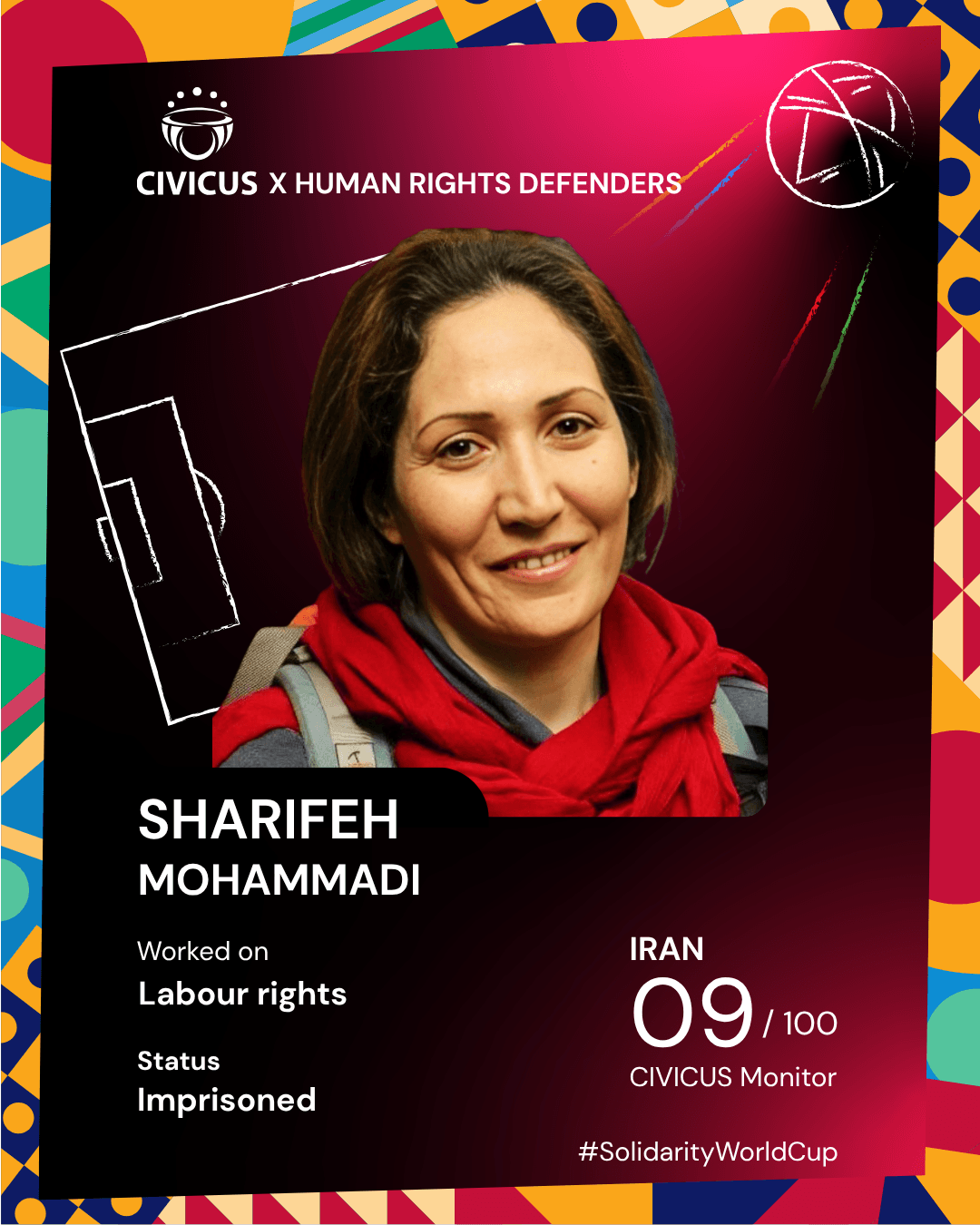
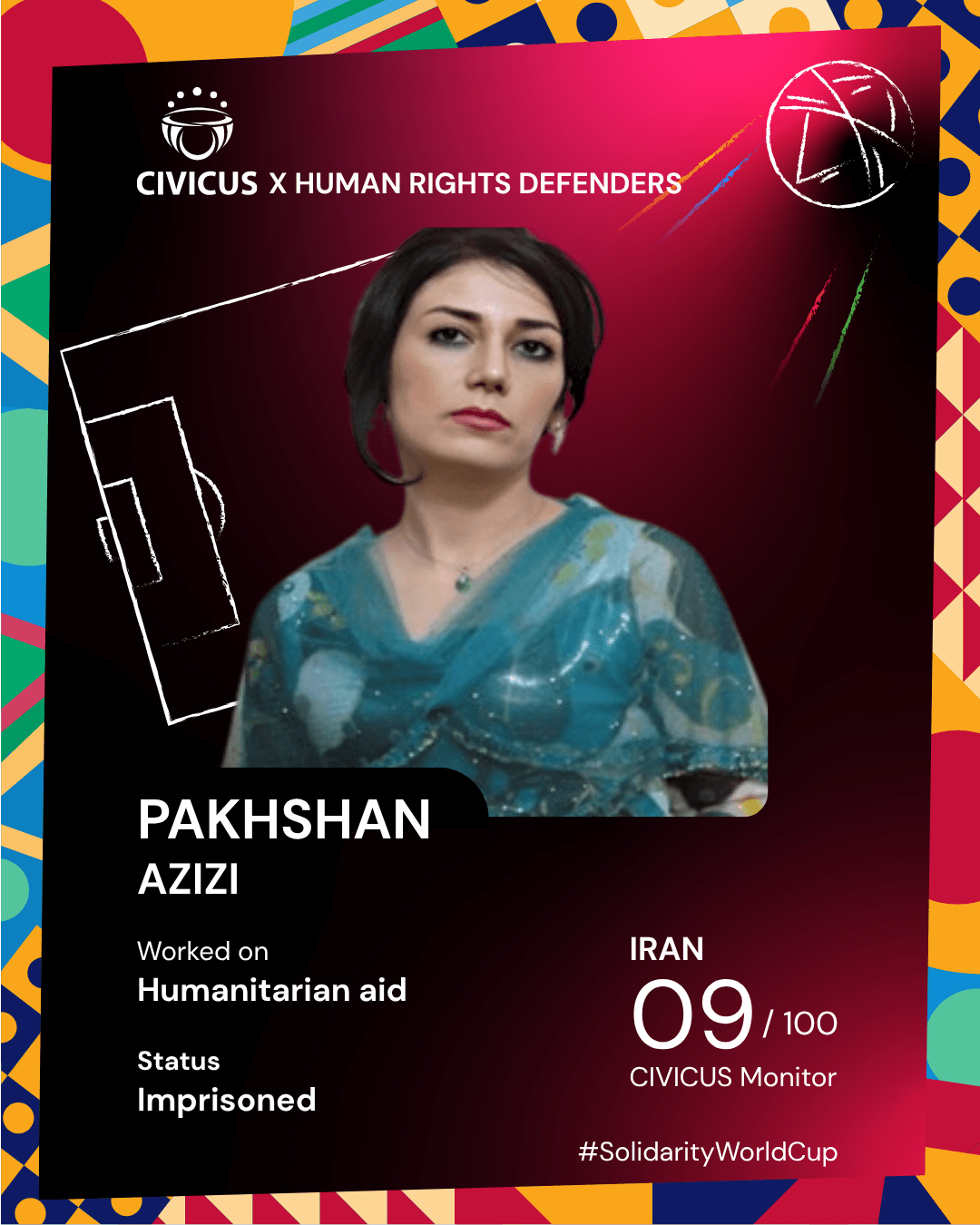
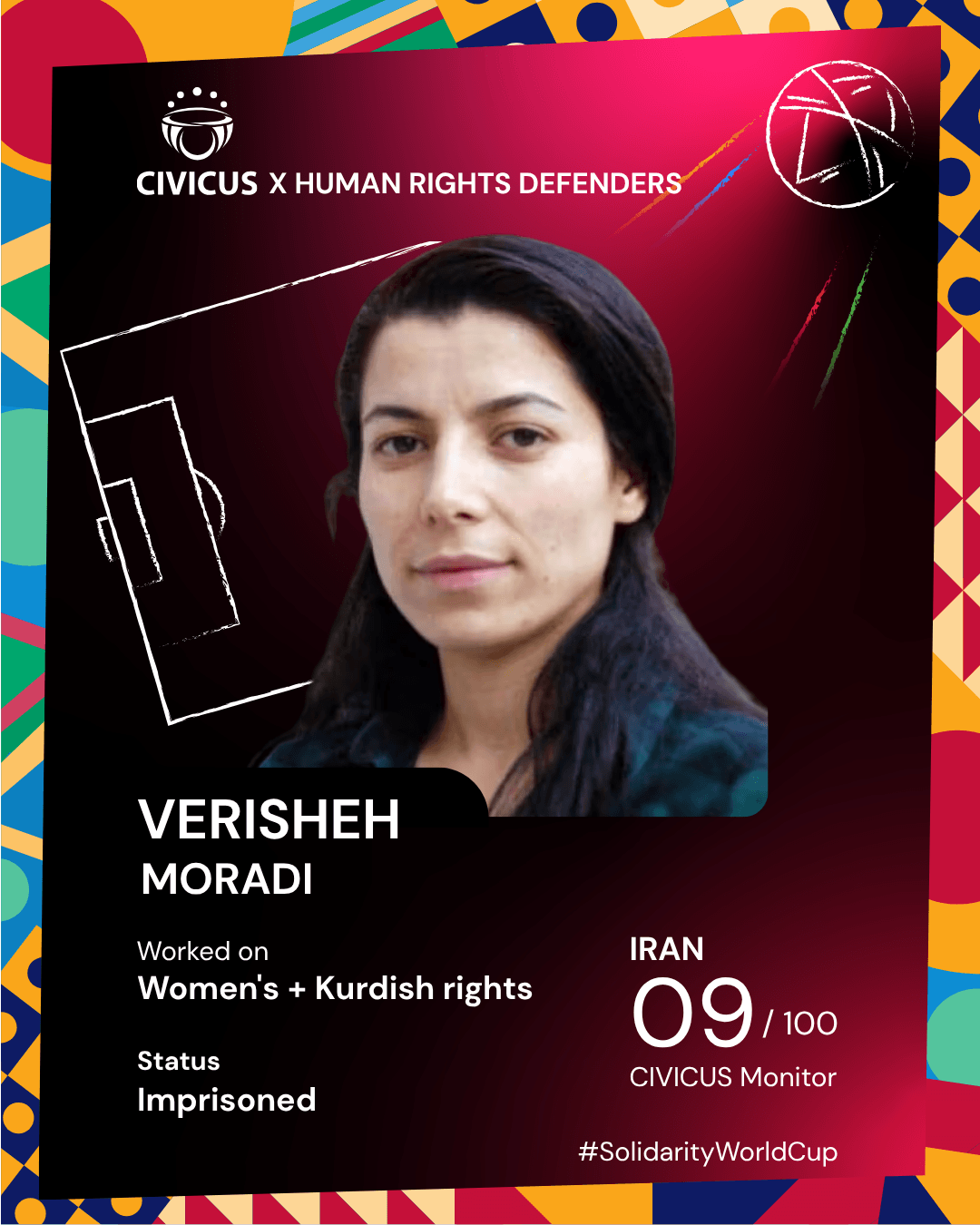
Civic space conditions in Iran are among the worst in the world. In 2026, thousands were killed for protesting. Activists are behind bars, with some facing execution, including women activists Pakhshan Azizi, Sharifeh Mohammadi and Verisheh Moradi. Support can make a difference: stand with them and every Iranian who dares to speak out.

New Zealand
New Zealand's civic freedoms remain strong. Civil society groups are able to form and operate without restrictions, freedom of expression is respected and there are rarely restrictions on protests. However, there have been recent incidents of arrest and prosecution of climate activists and growing attacks on Māori rights. Civil society won't be taking victory for granted.

Belgium
Belgium’s civic space is robust but showing cracks, with excessive force at protests and a proposed bill allowing the government to dissolve organisations deemed radical showing the growing pressure on civil society. Civil society coalitions are counterattacking through landmark litigation on climate, free expression and failure to act on the genocide in Gaza.

Egypt
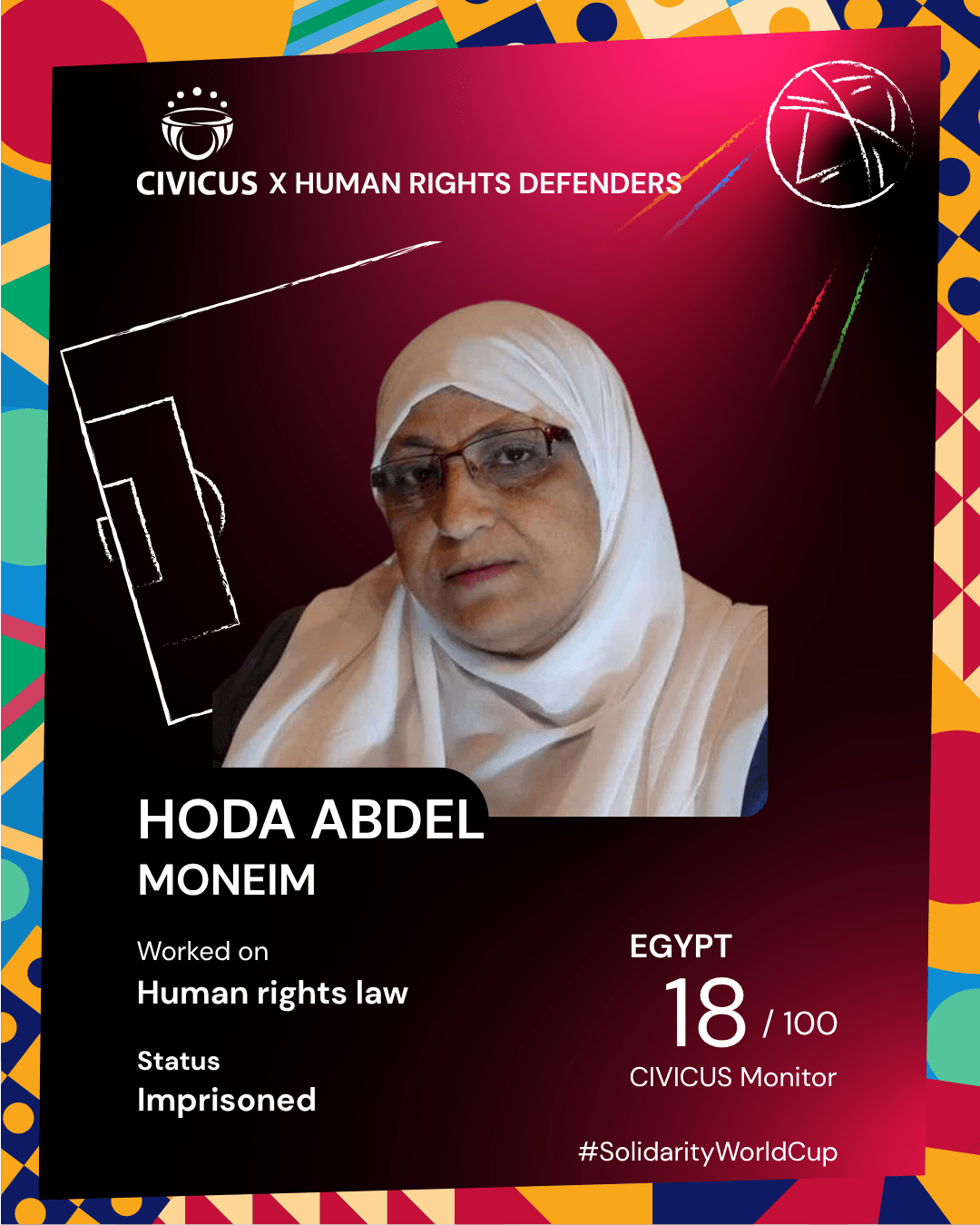
Egypt has one of the world's most repressive civic environments. Tens of thousands of activists, lawyers and journalists are imprisoned. But human rights defenders aren't standing on the sidelines. Inside and outside the country they keep truth alive under extraordinary pressure. Among them: Hoda Abdel Moneim, imprisoned since 2018. CIVICUS calls for her release.

France
France’s civic space has deteriorated markedly. It was relegated to obstructed status in 2025, reflecting years of growing restrictions on free expression and peaceful protest, and the misuse of laws to intimidate activists and dissolve organisatons. Like its national side, French civil society combines a history of triumphs with tactical innovation, and massive mobilisations continue despite restrictions.

Senegal
Senegal's civil society helped force a democratic transition in 2024, offering a powerful example of what organised, persistent civic action can achieve. But the introduction of a draconian anti-LGBTQI+ law and frequent judicial harassment of journalists are forcing rights activists to play a defensive game.

Iraq
Iraq's 2019 uprising for dignity and justice was met with assassination squads. Hundreds of young activists were killed or disappeared, yet the crowd refuses to fall silent. The movement they built lives on through resilient civil society networks and relentless protests to demand accountability despite state brutality.

Norway
Norway's civil society plays in open space, putting its freedom to work in support of global justice because defending human rights is a team sport. But the contest isn't won yet: Sámi, climate and Palestine solidarity protests have faced restrictions, and global aid cuts have forced Norwegian organisations supporting activists in repressive countries to scale down their work.

Argentina
In reigning World Cup champions Argentina, civic space is under growing pressure and has been downgraded to obstructed. Activists, human rights organisations, grassroots movements, independent media and protesters face increasing legal and practical constraints on their fundamental freedoms. The pitch is increasingly tilting — but Team Civil Society is still playing.

Algeria
Algerian activists, academics, artists, journalists and union leaders face a widespread climate of repression. Authorities use the penal code to prosecute and sentence them. Media outlets and rights organisations have been forced to close and try to operate underground or from abroad to keep documenting the truth and demand accountability. Off the pitch, the game goes on.

Austria
Austria’s civic space remains open, but rising far-right influence has raised red flags for press freedom and freedom of association. From attempts to undermine organisations to pressure on the media and proposed surveillance measures, civil society's defensive line is under strain. Civil society is speaking up as the political ground shifts.

Jordan
In Jordan, civil society operates under constant surveillance and restrictive laws. The use of spyware shows the authorities don't play fair. Activists and journalists face detention for online expression, while Palestine solidarity protesters are targeted.

Ghana
Not everyone is free to play in Ghana. A draconian anti-LGBTQI+ bill, criminalising what it calls the 'promotion' of LGBTQI+ activities, awaits presidential approval. Along with frequent assaults on journalists and protest restrictions, Ghana’s civic space is under strain.

Panama
People have mobilsed sustained nationwide protests in Panama, met with states of emergency, militarisation and restrictions. Yet civil society keeps mobilising, drawing on the same determination that fuelled the movement that shut down an environmentally destructive copper mine in 2023. Civil society is still on the pitch.

England
The right to protest is under increasing attack in the UK. The government is rewriting the rules of the game, with the recent Crime and Policing Act further undermining peaceful assembly rights. Despite a court deeming the proscription of the Palestine Action protest group unlawful, hundreds continue to be arrested on terror charges for expressing support. Civil society is fighting back, but the referee isn’t calling it fairly.

Croatia
Press freedom in Croatia is constrained by political pressure and abusive lawsuits, while the rise of the far right has fuelled attacks on civil society and journalists. But civil society isn't letting its opponents control the game: in late 2025, tens of thousands joined anti-fascist marches to reject hate.

Portugal
Portuguese civil society is covering the field, mobilising on climate justice, housing rights and migrant solidarity. But despite Portugal’s open civic space rating, the game is getting tougher. Rising far-right influence is normalising xenophobic and anti-rights narratives, creating a more hostile environment for human rights advocacy.

DR Congo
In the DRC's conflict-torn east, civic space is severely curtailed amid violence and impunity. Activists, aid workers and journalists are under threat. Some have been killed, others forced into hiding. Reporting on the crisis and atrocities is a life and death battle. Yet defenders persist — for survivors, for truth, for justice.

Uzbekistan
Uzbekistan makes its World Cup debut — but its civil society remains locked in the changing room. Fundamental freedoms are tightly restricted and many human rights defenders, lawyers and journalists are unjustly imprisoned. However, despite censorship, prosecutions and restrictive laws, there are still brave people who refuse to be silenced.

Colombia
The violence won't stop for the World Cup party in Colombia. Civic space is under severe pressure, especially in territories where armed groups and criminal organisations are active. Human rights defenders, Indigenous and Afro-descendant leaders, community organisers and journalists risk death and violence for defending their communities and demanding a lasting peace.
Czech Republic
The Czech Republic’s civic space is rated as open, but civil society is putting up a strong defence against attempts to roll back hard-won freedoms. After a right-wing populist party won power in October 2025, tens of thousands took to the streets to protest against the influence of far-right and nationalist forces. In April 2026, a draft 'foreign agents' law was shelved after public backlash — proof that civil society remains match fit.
South Africa
South Africa's constitution guarantees civic rights, but corruption, protest policing violations and killings of rights activists and whistleblowers are showing the gap between rights on paper and realities on the ground. Xenophobic attacks against African migrants are on the rise. Civil society champions rights, making a difference every day.
Switzerland
Switzerland's once open civic space recently slipped to narrowed amid increasing restrictions on protests and movements. Although environmental defenders in the country face prosecutions and surveillance, Swiss climate activists still scored a major win on the international stage, with a landmark 2024 victory at the European Court of Human Rights.
Bosnia & Herzegovina
Bosnia pulled off an upset by qualifying for the World Cup, and its civil society brings the same tenacity to defending civic space. Activists and journalists continue to face vilification and smear campaigns, but are still finding ways to score in an increasingly hostile climate: in 2025 a restrictive 'foreign agents' law in Republika Srpska was scrapped by the constitutional court.
Canada
Canada co-hosts the World Cup and broadly protects civic freedoms, but concerns remain over protest restrictions, criminal defamation and surveillance targeting environmental and land defenders, as well as activists for Palestinian rights. Their national side might not get far in the competition, but civil society is set to go the distance.
Qatar
Qatar hosted the last World Cup, its stadiums built by migrant workers who had no right to organise, protest or speak. The world's gaze may have moved on, but international civil society refuses to be sportswashed and keeps telling the truth.
Mexico
Mexico co-hosts the World Cup but behind the celebrations it remains one of the world's deadliest countries for human rights defenders and journalists. Killings and enforced disappearances persist amid pervasive impunity. Authorities, corporate interests and organised crime gangs converge to create a hostile environment for those who speak up. Yet environmental defenders, investigative journalists and mothers of the disappeared are demanding accountability and institutional reforms.
South Korea
South Korea showed how the crowd can make the difference when people protested in huge numbers to overturn martial law in 2024. As a result, civic freedoms are broadly protected and civil society is active. However, there are concerns about press freedom, the right to privacy, targeting of unions and restrictions and investigations of civil society groups working on North Korea.
Brazil
In World Cup frontrunners Brazil, defending the Amazon, protecting land and exposing abuses can come at a deadly cost. Indigenous peoples, Black communities and environmental defenders face intimidation, violence and structural racism. Yet they continue to stand their ground, protecting communities and the vital rainforest.
Haiti
Haiti's civil society works amid chaos and violence, without the state's protection. Gangs control territory, journalists are silenced and aid workers are attacked. Yet community networks and radio stations are the underdogs who refuse to be beaten, continuing to operate despite the risks.
Scotland
Scotland plays under UK rules — and those rules are tilting the pitch. Peaceful protesters face arrest for non-violent civil disobedience. In April 2026, it was revealed that Scottish prosecutors had received over 100 reports related to support for Palestine Action in just seven months, more than for any other group since the Terrorism Act was introduced in 2000. But civil society is playing on, fighting back in the courts and on the streets.
Morocco
Lavish spending on stadiums to host the next World Cup helped trigger a Gen Z-led protest movement that won public spending commitments. But Morocco's young team of activists paid a heavy price, with thousands arrested. Authorities continue a wide-scale retaliation campaign with detentions, prosecutions and severe prison sentences.
Turkey
Free speech in Turkey has been heavily eroded: the country has long had a reputation as one of the world’s leading jailers of journalists. In 2025, millions protested following the detention of Istanbul's mayor and were met with mass arrests. Despite this, civil society inside and outside the country refuses to concede defeat, and is connecting, documenting and resisting.
Paraguay
In Paraguay, an increasingly hostile environment for people working on anti-corruption and transparency issues, and environmental and land rights, is putting civic freedoms under pressure. Yet activists and communities keep playing uphill, pushing back against inequality, impunity and the powerful interests behind land conflicts.
United States
The USA, one of three World Cup hosts, has seen its civic space downgraded to obstructed because the president won't play by the rules. Activists and protesters, particularly those advocating for Palestinian and migrants' rights, face arbitrary detention and criminalisation. Civil society funding has been slashed and freedom of expression is under threat. Civil society is pushing back loudly and in numbers, mobilising on the streets and fighting in the courtrooms.
Australia
Australia's civic space is broadly protected, but climate and Palestine solidarity protesters face arrests, excessive force and protest restrictions when they mobilise. Anti-protest laws constain the power of the crowd but civil society continues to challenge them.
Germany
Germany has been relegated down the civic space rankings, declining from open to obstructed following a harsh crackdown on climate and Palestinian solidarity protests. Police brutality and the criminalisation of activists have narrowed space for free expression. Yet people refuse to stay on the sidelines, with hundreds of thousands still taking to the streets.
Ivory Coast
Côte d’Ivoire’s government doesn't play by the rules. Protests are frequently banned and protesters and activists have been jailed. A 2024 ordinace restricts the functioning of civil society organisations. Even so, a resilient civil society - with human rights groups, independent journalists, womens organisations and youth movements - keeps demanding fair play.
Ecuador
Ecuador's civic space is rapidly deteriorating. The game is becoming increasingly unfair. People defending land, water and life face extreme violence, criminalisation and punitive financial measures. Amid a security crisis and growing militarisation, communities, environmental activists, human rights groups and Indigenous peoples continue to resist.
Curaçao
Curaçao, an autonomous country within the Kingdom of the Netherlands, doesn't have its own civic space rating. But like its national team, the island’s civil society fights its own battles, working to tackle challenges such as inequality, the lack of asylum protections and the growing impacts of climate change.
Netherlands
Civic space in the Netherlands has narrowed, with climate and Palestine solidarity protests met by heavy crackdowns and proposed laws seeking to constrain civil society. Still, Dutch civil society continues to lead the line, with movements and organisations mobilising in the courts and on the streets to hold the government and private sector accountable to their human rights commitments.
Sweden
Sweden’s civic space rates highly, but there are signs of deterioration. Recent political shifts have brought funding cuts, growing hostility towards civil society and a harsher stance on protests. Civil society is pushing back, because a strong defence matters.
Tunisia
Tunisia's 2011 revolution gave birth to one of the region's most vibrant civil societies. But it's under attack because the president wants to be manager, captain and referee. He rewrote the constitution to grab power and frequently jails critics. But recent protests show that the spirit of the revolution hasn't been extinguished.
Japan
Japan's civic freedoms are broadly protected, but the pitch isn't entirely clear: there are concerns about censorship and press freedom restrictions. The government has imposed tougher penalties for criminal defamation and proposed restrictive security laws that could be used to silence dissent.
Uruguay
Uruguayan civil society plays in one of the Americas' most open civic spaces. An active civil society helps keep the pitch level for everyone, showing that when people can organise freely, change is possible.
Cape Verde
Cape Verde may be a World Cup minnow, but when it comes to civic space it's one of the champions. It's one of only two African states where civic space is rated as open, meaning civil society can speak, organise and participate freely. A newly created National Observatory for Human Rights is tasked with providing updated human rights data and monitoring compliance with national and international committments.
Spain
Spain’s vibrant civil society is holding strong despite civic space challenges, including criminalisation and excessive force against protests and police infiltration of movements. The infamous 2015 gag law, which restricts expression and protest rights, has penalised hundreds of thousands. But the game is far from over, and civil society continues its struggle to have the law repealed.
Saudi Arabia
Saudi Arabia is one of the world's worst countries for civic freedoms. Women are jailed for demanding rights. Journalists have been executed for reporting. Yet a determined diaspora keeps telling the stories that stadiums and sponsorship deals are designed to bury, because the reality of repression is bigger than the world's biggest sportswashing campaign.
Belgium
Belgium’s civic space is robust but showing cracks, with excessive force at protests and a proposed bill allowing the government to dissolve organisations deemed radical showing the growing pressure on civil society. Civil society coalitions are counterattacking through landmark litigation on climate, free expression and failure to act on the genocide in Gaza.
Iran
Civic space conditions in Iran are among the worst in the world. In 2026, thousands were killed for protesting. Activists are behind bars, with some facing execution, including women activists Pakhshan Azizi, Sharifeh Mohammadi and Verisheh Moradi. Support can make a difference: stand with them and every Iranian who dares to speak out.
New Zealand
New Zealand's civic freedoms remain strong. Civil society groups are able to form and operate without restrictions, freedom of expression is respected and there are rarely restrictions on protests. However, there have been recent incidents of arrest and prosecution of climate activists and growing attacks on Māori rights. Civil society won't be taking victory for granted.
Egypt
Egypt has one of the world's most repressive civic environments. Tens of thousands of activists, lawyers and journalists are imprisoned. But human rights defenders aren't standing on the sidelines. Inside and outside the country they keep truth alive under extraordinary pressure. Among them: Hoda Abdel Moneim, imprisoned since 2018. CIVICUS calls for her release.
Norway
Norway's civil society plays in open space, putting its freedom to work in support of global justice because defending human rights is a team sport. But the contest isn't won yet: Sámi, climate and Palestine solidarity protests have faced restrictions, and global aid cuts have forced Norwegian organisations supporting activists in repressive countries to scale down their work.
Senegal
Senegal's civil society helped force a democratic transition in 2024, offering a powerful example of what organised, persistent civic action can achieve. But the introduction of a draconian anti-LGBTQI+ law and frequent judicial harassment of journalists are forcing rights activists to play a defensive game.
France
France’s civic space has deteriorated markedly. It was relegated to obstructed status in 2025, reflecting years of growing restrictions on free expression and peaceful protest, and the misuse of laws to intimidate activists and dissolve organisatons. Like its national side, French civil society combines a history of triumphs with tactical innovation, and massive mobilisations continue despite restrictions.
Iraq
Iraq's 2019 uprising for dignity and justice was met with assassination squads. Hundreds of young activists were killed or disappeared, yet the crowd refuses to fall silent. The movement they built lives on through resilient civil society networks and relentless protests to demand accountability despite state brutality.
Argentina
In reigning World Cup champions Argentina, civic space is under growing pressure and has been downgraded to obstructed. Activists, human rights organisations, grassroots movements, independent media and protesters face increasing legal and practical constraints on their fundamental freedoms. The pitch is increasingly tilting — but Team Civil Society is still playing.
Austria
Austria’s civic space remains open, but rising far-right influence has raised red flags for press freedom and freedom of association. From attempts to undermine organisations to pressure on the media and proposed surveillance measures, civil society's defensive line is under strain. Civil society is speaking up as the political ground shifts.
Jordan
In Jordan, civil society operates under constant surveillance and restrictive laws. The use of spyware shows the authorities don't play fair. Activists and journalists face detention for online expression, while Palestine solidarity protesters are targeted.
Algeria
Algerian activists, academics, artists, journalists and union leaders face a widespread climate of repression. Authorities use the penal code to prosecute and sentence them. Media outlets and rights organisations have been forced to close and try to operate underground or from abroad to keep documenting the truth and demand accountability. Off the pitch, the game goes on.
England
The right to protest is under increasing attack in the UK. The government is rewriting the rules of the game, with the recent Crime and Policing Act further undermining peaceful assembly rights. Despite a court deeming the proscription of the Palestine Action protest group unlawful, hundreds continue to be arrested on terror charges for expressing support. Civil society is fighting back, but the referee isn’t calling it fairly.
Ghana
Not everyone is free to play in Ghana. A draconian anti-LGBTQI+ bill, criminalising what it calls the 'promotion' of LGBTQI+ activities, awaits presidential approval. Along with frequent assaults on journalists and protest restrictions, Ghana’s civic space is under strain.
Panama
People have mobilsed sustained nationwide protests in Panama, met with states of emergency, militarisation and restrictions. Yet civil society keeps mobilising, drawing on the same determination that fuelled the movement that shut down an environmentally destructive copper mine in 2023. Civil society is still on the pitch.
Croatia
Press freedom in Croatia is constrained by political pressure and abusive lawsuits, while the rise of the far right has fuelled attacks on civil society and journalists. But civil society isn't letting its opponents control the game: in late 2025, tens of thousands joined anti-fascist marches to reject hate.
Portugal
Portuguese civil society is covering the field, mobilising on climate justice, housing rights and migrant solidarity. But despite Portugal’s open civic space rating, the game is getting tougher. Rising far-right influence is normalising xenophobic and anti-rights narratives, creating a more hostile environment for human rights advocacy.
Uzbekistan
Uzbekistan makes its World Cup debut — but its civil society remains locked in the changing room. Fundamental freedoms are tightly restricted and many human rights defenders, lawyers and journalists are unjustly imprisoned. However, despite censorship, prosecutions and restrictive laws, there are still brave people who refuse to be silenced.
Colombia
The violence won't stop for the World Cup party in Colombia. Civic space is under severe pressure, especially in territories where armed groups and criminal organisations are active. Human rights defenders, Indigenous and Afro-descendant leaders, community organisers and journalists risk death and violence for defending their communities and demanding a lasting peace.
DR Congo
In the DRC's conflict-torn east, civic space is severely curtailed amid violence and impunity. Activists, aid workers and journalists are under threat. Some have been killed, others forced into hiding. Reporting on the crisis and atrocities is a life and death battle. Yet defenders persist — for survivors, for truth, for justice.
Scotland
Scotland plays under UK rules — and those rules are tilting the pitch. Peaceful protesters face arrest for non-violent civil disobedience. In April 2026, it was revealed that Scottish prosecutors had received over 100 reports related to support for Palestine Action in just seven months, more than for any other group since the Terrorism Act was introduced in 2000. But civil society is playing on, fighting back in the courts and on the streets.
Brazil
In World Cup frontrunners Brazil, defending the Amazon, protecting land and exposing abuses can come at a deadly cost. Indigenous peoples, Black communities and environmental defenders face intimidation, violence and structural racism. Yet they continue to stand their ground, protecting communities and the vital rainforest.
Morocco
Lavish spending on stadiums to host the next World Cup helped trigger a Gen Z-led protest movement that won public spending commitments. But Morocco's young team of activists paid a heavy price, with thousands arrested. Authorities continue a wide-scale retaliation campaign with detentions, prosecutions and severe prison sentences.
Haiti
Haiti's civil society works amid chaos and violence, without the state's protection. Gangs control territory, journalists are silenced and aid workers are attacked. Yet community networks and radio stations are the underdogs who refuse to be beaten, continuing to operate despite the risks.
Switzerland
Switzerland's once open civic space recently slipped to narrowed amid increasing restrictions on protests and movements. Although environmental defenders in the country face prosecutions and surveillance, Swiss climate activists still scored a major win on the international stage, with a landmark 2024 victory at the European Court of Human Rights.
Canada
Canada co-hosts the World Cup and broadly protects civic freedoms, but concerns remain over protest restrictions, criminal defamation and surveillance targeting environmental and land defenders, as well as activists for Palestinian rights. Their national side might not get far in the competition, but civil society is set to go the distance.
Bosnia & Herzegovina
Bosnia pulled off an upset by qualifying for the World Cup, and its civil society brings the same tenacity to defending civic space. Activists and journalists continue to face vilification and smear campaigns, but are still finding ways to score in an increasingly hostile climate: in 2025 a restrictive 'foreign agents' law in Republika Srpska was scrapped by the constitutional court.
Qatar
Qatar hosted the last World Cup, its stadiums built by migrant workers who had no right to organise, protest or speak. The world's gaze may have moved on, but international civil society refuses to be sportswashed and keeps telling the truth.
Czech Republic
The Czech Republic’s civic space is rated as open, but civil society is putting up a strong defence against attempts to roll back hard-won freedoms. After a right-wing populist party won power in October 2025, tens of thousands took to the streets to protest against the influence of far-right and nationalist forces. In April 2026, a draft 'foreign agents' law was shelved after public backlash — proof that civil society remains match fit.
Mexico
Mexico co-hosts the World Cup but behind the celebrations it remains one of the world's deadliest countries for human rights defenders and journalists. Killings and enforced disappearances persist amid pervasive impunity. Authorities, corporate interests and organised crime gangs converge to create a hostile environment for those who speak up. Yet environmental defenders, investigative journalists and mothers of the disappeared are demanding accountability and institutional reforms.
South Africa
South Africa's constitution guarantees civic rights, but corruption, protest policing violations and killings of rights activists and whistleblowers are showing the gap between rights on paper and realities on the ground. Xenophobic attacks against African migrants are on the rise. Civil society champions rights, making a difference every day.
South Korea
South Korea showed how the crowd can make the difference when people protested in huge numbers to overturn martial law in 2024. As a result, civic freedoms are broadly protected and civil society is active. However, there are concerns about press freedom, the right to privacy, targeting of unions and restrictions and investigations of civil society groups working on North Korea.
Curaçao
Curaçao, an autonomous country within the Kingdom of the Netherlands, doesn't have its own civic space rating. But like its national team, the island’s civil society fights its own battles, working to tackle challenges such as inequality, the lack of asylum protections and the growing impacts of climate change.
Ivory Coast
Côte d’Ivoire’s government doesn't play by the rules. Protests are frequently banned and protesters and activists have been jailed. A 2024 ordinace restricts the functioning of civil society organisations. Even so, a resilient civil society - with human rights groups, independent journalists, womens organisations and youth movements - keeps demanding fair play.
Ecuador
Ecuador's civic space is rapidly deteriorating. The game is becoming increasingly unfair. People defending land, water and life face extreme violence, criminalisation and punitive financial measures. Amid a security crisis and growing militarisation, communities, environmental activists, human rights groups and Indigenous peoples continue to resist.
Germany
Germany has been relegated down the civic space rankings, declining from open to obstructed following a harsh crackdown on climate and Palestinian solidarity protests. Police brutality and the criminalisation of activists have narrowed space for free expression. Yet people refuse to stay on the sidelines, with hundreds of thousands still taking to the streets.
Japan
Japan's civic freedoms are broadly protected, but the pitch isn't entirely clear: there are concerns about censorship and press freedom restrictions. The government has imposed tougher penalties for criminal defamation and proposed restrictive security laws that could be used to silence dissent.
Sweden
Sweden’s civic space rates highly, but there are signs of deterioration. Recent political shifts have brought funding cuts, growing hostility towards civil society and a harsher stance on protests. Civil society is pushing back, because a strong defence matters.
Tunisia
Tunisia's 2011 revolution gave birth to one of the region's most vibrant civil societies. But it's under attack because the president wants to be manager, captain and referee. He rewrote the constitution to grab power and frequently jails critics. But recent protests show that the spirit of the revolution hasn't been extinguished.
Netherlands
Civic space in the Netherlands has narrowed, with climate and Palestine solidarity protests met by heavy crackdowns and proposed laws seeking to constrain civil society. Still, Dutch civil society continues to lead the line, with movements and organisations mobilising in the courts and on the streets to hold the government and private sector accountable to their human rights commitments.
Turkey
Free speech in Turkey has been heavily eroded: the country has long had a reputation as one of the world’s leading jailers of journalists. In 2025, millions protested following the detention of Istanbul's mayor and were met with mass arrests. Despite this, civil society inside and outside the country refuses to concede defeat, and is connecting, documenting and resisting.
United States
The USA, one of three World Cup hosts, has seen its civic space downgraded to obstructed because the president won't play by the rules. Activists and protesters, particularly those advocating for Palestinian and migrants' rights, face arbitrary detention and criminalisation. Civil society funding has been slashed and freedom of expression is under threat. Civil society is pushing back loudly and in numbers, mobilising on the streets and fighting in the courtrooms.
Paraguay
In Paraguay, an increasingly hostile environment for people working on anti-corruption and transparency issues, and environmental and land rights, is putting civic freedoms under pressure. Yet activists and communities keep playing uphill, pushing back against inequality, impunity and the powerful interests behind land conflicts.
Australia
Australia's civic space is broadly protected, but climate and Palestine solidarity protesters face arrests, excessive force and protest restrictions when they mobilise. Anti-protest laws constain the power of the crowd but civil society continues to challenge them.
Norway
Norway's civil society plays in open space, putting its freedom to work in support of global justice because defending human rights is a team sport. But the contest isn't won yet: Sámi, climate and Palestine solidarity protests have faced restrictions, and global aid cuts have forced Norwegian organisations supporting activists in repressive countries to scale down their work.
France
France’s civic space has deteriorated markedly. It was relegated to obstructed status in 2025, reflecting years of growing restrictions on free expression and peaceful protest, and the misuse of laws to intimidate activists and dissolve organisatons. Like its national side, French civil society combines a history of triumphs with tactical innovation, and massive mobilisations continue despite restrictions.
Senegal
Senegal's civil society helped force a democratic transition in 2024, offering a powerful example of what organised, persistent civic action can achieve. But the introduction of a draconian anti-LGBTQI+ law and frequent judicial harassment of journalists are forcing rights activists to play a defensive game.
Iraq
Iraq's 2019 uprising for dignity and justice was met with assassination squads. Hundreds of young activists were killed or disappeared, yet the crowd refuses to fall silent. The movement they built lives on through resilient civil society networks and relentless protests to demand accountability despite state brutality.
Cape Verde
Cape Verde may be a World Cup minnow, but when it comes to civic space it's one of the champions. It's one of only two African states where civic space is rated as open, meaning civil society can speak, organise and participate freely. A newly created National Observatory for Human Rights is tasked with providing updated human rights data and monitoring compliance with national and international committments.
Saudi Arabia
Saudi Arabia is one of the world's worst countries for civic freedoms. Women are jailed for demanding rights. Journalists have been executed for reporting. Yet a determined diaspora keeps telling the stories that stadiums and sponsorship deals are designed to bury, because the reality of repression is bigger than the world's biggest sportswashing campaign.
Uruguay
Uruguayan civil society plays in one of the Americas' most open civic spaces. An active civil society helps keep the pitch level for everyone, showing that when people can organise freely, change is possible.
Spain
Spain’s vibrant civil society is holding strong despite civic space challenges, including criminalisation and excessive force against protests and police infiltration of movements. The infamous 2015 gag law, which restricts expression and protest rights, has penalised hundreds of thousands. But the game is far from over, and civil society continues its struggle to have the law repealed.
New Zealand
New Zealand's civic freedoms remain strong. Civil society groups are able to form and operate without restrictions, freedom of expression is respected and there are rarely restrictions on protests. However, there have been recent incidents of arrest and prosecution of climate activists and growing attacks on Māori rights. Civil society won't be taking victory for granted.
Belgium
Belgium’s civic space is robust but showing cracks, with excessive force at protests and a proposed bill allowing the government to dissolve organisations deemed radical showing the growing pressure on civil society. Civil society coalitions are counterattacking through landmark litigation on climate, free expression and failure to act on the genocide in Gaza.
Egypt
Egypt has one of the world's most repressive civic environments. Tens of thousands of activists, lawyers and journalists are imprisoned. But human rights defenders aren't standing on the sidelines. Inside and outside the country they keep truth alive under extraordinary pressure. Among them: Hoda Abdel Moneim, imprisoned since 2018. CIVICUS calls for her release.
Iran
Civic space conditions in Iran are among the worst in the world. In 2026, thousands were killed for protesting. Activists are behind bars, with some facing execution, including women activists Pakhshan Azizi, Sharifeh Mohammadi and Verisheh Moradi. Support can make a difference: stand with them and every Iranian who dares to speak out.
Panama
People have mobilsed sustained nationwide protests in Panama, met with states of emergency, militarisation and restrictions. Yet civil society keeps mobilising, drawing on the same determination that fuelled the movement that shut down an environmentally destructive copper mine in 2023. Civil society is still on the pitch.
England
The right to protest is under increasing attack in the UK. The government is rewriting the rules of the game, with the recent Crime and Policing Act further undermining peaceful assembly rights. Despite a court deeming the proscription of the Palestine Action protest group unlawful, hundreds continue to be arrested on terror charges for expressing support. Civil society is fighting back, but the referee isn’t calling it fairly.
Croatia
Press freedom in Croatia is constrained by political pressure and abusive lawsuits, while the rise of the far right has fuelled attacks on civil society and journalists. But civil society isn't letting its opponents control the game: in late 2025, tens of thousands joined anti-fascist marches to reject hate.
Ghana
Not everyone is free to play in Ghana. A draconian anti-LGBTQI+ bill, criminalising what it calls the 'promotion' of LGBTQI+ activities, awaits presidential approval. Along with frequent assaults on journalists and protest restrictions, Ghana’s civic space is under strain.
Colombia
The violence won't stop for the World Cup party in Colombia. Civic space is under severe pressure, especially in territories where armed groups and criminal organisations are active. Human rights defenders, Indigenous and Afro-descendant leaders, community organisers and journalists risk death and violence for defending their communities and demanding a lasting peace.
Portugal
Portuguese civil society is covering the field, mobilising on climate justice, housing rights and migrant solidarity. But despite Portugal’s open civic space rating, the game is getting tougher. Rising far-right influence is normalising xenophobic and anti-rights narratives, creating a more hostile environment for human rights advocacy.
DR Congo
In the DRC's conflict-torn east, civic space is severely curtailed amid violence and impunity. Activists, aid workers and journalists are under threat. Some have been killed, others forced into hiding. Reporting on the crisis and atrocities is a life and death battle. Yet defenders persist — for survivors, for truth, for justice.
Uzbekistan
Uzbekistan makes its World Cup debut — but its civil society remains locked in the changing room. Fundamental freedoms are tightly restricted and many human rights defenders, lawyers and journalists are unjustly imprisoned. However, despite censorship, prosecutions and restrictive laws, there are still brave people who refuse to be silenced.
Algeria
Algerian activists, academics, artists, journalists and union leaders face a widespread climate of repression. Authorities use the penal code to prosecute and sentence them. Media outlets and rights organisations have been forced to close and try to operate underground or from abroad to keep documenting the truth and demand accountability. Off the pitch, the game goes on.
Austria
Austria’s civic space remains open, but rising far-right influence has raised red flags for press freedom and freedom of association. From attempts to undermine organisations to pressure on the media and proposed surveillance measures, civil society's defensive line is under strain. Civil society is speaking up as the political ground shifts.
Jordan
In Jordan, civil society operates under constant surveillance and restrictive laws. The use of spyware shows the authorities don't play fair. Activists and journalists face detention for online expression, while Palestine solidarity protesters are targeted.
Argentina
In reigning World Cup champions Argentina, civic space is under growing pressure and has been downgraded to obstructed. Activists, human rights organisations, grassroots movements, independent media and protesters face increasing legal and practical constraints on their fundamental freedoms. The pitch is increasingly tilting — but Team Civil Society is still playing.
South Africa
South Africa's constitution guarantees civic rights, but corruption, protest policing violations and killings of rights activists and whistleblowers are showing the gap between rights on paper and realities on the ground. Xenophobic attacks against African migrants are on the rise. Civil society champions rights, making a difference every day.
Canada
Canada co-hosts the World Cup and broadly protects civic freedoms, but concerns remain over protest restrictions, criminal defamation and surveillance targeting environmental and land defenders, as well as activists for Palestinian rights. Their national side might not get far in the competition, but civil society is set to go the distance.
Germany
Germany has been relegated down the civic space rankings, declining from open to obstructed following a harsh crackdown on climate and Palestinian solidarity protests. Police brutality and the criminalisation of activists have narrowed space for free expression. Yet people refuse to stay on the sidelines, with hundreds of thousands still taking to the streets.
Paraguay
In Paraguay, an increasingly hostile environment for people working on anti-corruption and transparency issues, and environmental and land rights, is putting civic freedoms under pressure. Yet activists and communities keep playing uphill, pushing back against inequality, impunity and the powerful interests behind land conflicts.
Netherlands
Civic space in the Netherlands has narrowed, with climate and Palestine solidarity protests met by heavy crackdowns and proposed laws seeking to constrain civil society. Still, Dutch civil society continues to lead the line, with movements and organisations mobilising in the courts and on the streets to hold the government and private sector accountable to their human rights commitments.
Morocco
Lavish spending on stadiums to host the next World Cup helped trigger a Gen Z-led protest movement that won public spending commitments. But Morocco's young team of activists paid a heavy price, with thousands arrested. Authorities continue a wide-scale retaliation campaign with detentions, prosecutions and severe prison sentences.
Brazil
In World Cup frontrunners Brazil, defending the Amazon, protecting land and exposing abuses can come at a deadly cost. Indigenous peoples, Black communities and environmental defenders face intimidation, violence and structural racism. Yet they continue to stand their ground, protecting communities and the vital rainforest.
Japan
Japan's civic freedoms are broadly protected, but the pitch isn't entirely clear: there are concerns about censorship and press freedom restrictions. The government has imposed tougher penalties for criminal defamation and proposed restrictive security laws that could be used to silence dissent.
France
France’s civic space has deteriorated markedly. It was relegated to obstructed status in 2025, reflecting years of growing restrictions on free expression and peaceful protest, and the misuse of laws to intimidate activists and dissolve organisatons. Like its national side, French civil society combines a history of triumphs with tactical innovation, and massive mobilisations continue despite restrictions.
Sweden
Sweden’s civic space rates highly, but there are signs of deterioration. Recent political shifts have brought funding cuts, growing hostility towards civil society and a harsher stance on protests. Civil society is pushing back, because a strong defence matters.
Ivory Coast
Côte d’Ivoire’s government doesn't play by the rules. Protests are frequently banned and protesters and activists have been jailed. A 2024 ordinace restricts the functioning of civil society organisations. Even so, a resilient civil society - with human rights groups, independent journalists, womens organisations and youth movements - keeps demanding fair play.
Norway
Norway's civil society plays in open space, putting its freedom to work in support of global justice because defending human rights is a team sport. But the contest isn't won yet: Sámi, climate and Palestine solidarity protests have faced restrictions, and global aid cuts have forced Norwegian organisations supporting activists in repressive countries to scale down their work.
Mexico
Mexico co-hosts the World Cup but behind the celebrations it remains one of the world's deadliest countries for human rights defenders and journalists. Killings and enforced disappearances persist amid pervasive impunity. Authorities, corporate interests and organised crime gangs converge to create a hostile environment for those who speak up. Yet environmental defenders, investigative journalists and mothers of the disappeared are demanding accountability and institutional reforms.
Ecuador
Ecuador's civic space is rapidly deteriorating. The game is becoming increasingly unfair. People defending land, water and life face extreme violence, criminalisation and punitive financial measures. Amid a security crisis and growing militarisation, communities, environmental activists, human rights groups and Indigenous peoples continue to resist.
England
The right to protest is under increasing attack in the UK. The government is rewriting the rules of the game, with the recent Crime and Policing Act further undermining peaceful assembly rights. Despite a court deeming the proscription of the Palestine Action protest group unlawful, hundreds continue to be arrested on terror charges for expressing support. Civil society is fighting back, but the referee isn’t calling it fairly.
DR Congo
In the DRC's conflict-torn east, civic space is severely curtailed amid violence and impunity. Activists, aid workers and journalists are under threat. Some have been killed, others forced into hiding. Reporting on the crisis and atrocities is a life and death battle. Yet defenders persist — for survivors, for truth, for justice.
United States
The USA, one of three World Cup hosts, has seen its civic space downgraded to obstructed because the president won't play by the rules. Activists and protesters, particularly those advocating for Palestinian and migrants' rights, face arbitrary detention and criminalisation. Civil society funding has been slashed and freedom of expression is under threat. Civil society is pushing back loudly and in numbers, mobilising on the streets and fighting in the courtrooms.
Bosnia & Herzegovina
Bosnia pulled off an upset by qualifying for the World Cup, and its civil society brings the same tenacity to defending civic space. Activists and journalists continue to face vilification and smear campaigns, but are still finding ways to score in an increasingly hostile climate: in 2025 a restrictive 'foreign agents' law in Republika Srpska was scrapped by the constitutional court.
Belgium
Belgium’s civic space is robust but showing cracks, with excessive force at protests and a proposed bill allowing the government to dissolve organisations deemed radical showing the growing pressure on civil society. Civil society coalitions are counterattacking through landmark litigation on climate, free expression and failure to act on the genocide in Gaza.
Senegal
Senegal's civil society helped force a democratic transition in 2024, offering a powerful example of what organised, persistent civic action can achieve. But the introduction of a draconian anti-LGBTQI+ law and frequent judicial harassment of journalists are forcing rights activists to play a defensive game.
Portugal
Portuguese civil society is covering the field, mobilising on climate justice, housing rights and migrant solidarity. But despite Portugal’s open civic space rating, the game is getting tougher. Rising far-right influence is normalising xenophobic and anti-rights narratives, creating a more hostile environment for human rights advocacy.
Croatia
Press freedom in Croatia is constrained by political pressure and abusive lawsuits, while the rise of the far right has fuelled attacks on civil society and journalists. But civil society isn't letting its opponents control the game: in late 2025, tens of thousands joined anti-fascist marches to reject hate.
Spain
Spain’s vibrant civil society is holding strong despite civic space challenges, including criminalisation and excessive force against protests and police infiltration of movements. The infamous 2015 gag law, which restricts expression and protest rights, has penalised hundreds of thousands. But the game is far from over, and civil society continues its struggle to have the law repealed.
Austria
Austria’s civic space remains open, but rising far-right influence has raised red flags for press freedom and freedom of association. From attempts to undermine organisations to pressure on the media and proposed surveillance measures, civil society's defensive line is under strain. Civil society is speaking up as the political ground shifts.
Switzerland
Switzerland's once open civic space recently slipped to narrowed amid increasing restrictions on protests and movements. Although environmental defenders in the country face prosecutions and surveillance, Swiss climate activists still scored a major win on the international stage, with a landmark 2024 victory at the European Court of Human Rights.
Algeria
Algerian activists, academics, artists, journalists and union leaders face a widespread climate of repression. Authorities use the penal code to prosecute and sentence them. Media outlets and rights organisations have been forced to close and try to operate underground or from abroad to keep documenting the truth and demand accountability. Off the pitch, the game goes on.
Argentina
In reigning World Cup champions Argentina, civic space is under growing pressure and has been downgraded to obstructed. Activists, human rights organisations, grassroots movements, independent media and protesters face increasing legal and practical constraints on their fundamental freedoms. The pitch is increasingly tilting — but Team Civil Society is still playing.
Cape Verde
Cape Verde may be a World Cup minnow, but when it comes to civic space it's one of the champions. It's one of only two African states where civic space is rated as open, meaning civil society can speak, organise and participate freely. A newly created National Observatory for Human Rights is tasked with providing updated human rights data and monitoring compliance with national and international committments.
Colombia
The violence won't stop for the World Cup party in Colombia. Civic space is under severe pressure, especially in territories where armed groups and criminal organisations are active. Human rights defenders, Indigenous and Afro-descendant leaders, community organisers and journalists risk death and violence for defending their communities and demanding a lasting peace.
Ghana
Not everyone is free to play in Ghana. A draconian anti-LGBTQI+ bill, criminalising what it calls the 'promotion' of LGBTQI+ activities, awaits presidential approval. Along with frequent assaults on journalists and protest restrictions, Ghana’s civic space is under strain.
Australia
Australia's civic space is broadly protected, but climate and Palestine solidarity protesters face arrests, excessive force and protest restrictions when they mobilise. Anti-protest laws constain the power of the crowd but civil society continues to challenge them.
Egypt
Egypt has one of the world's most repressive civic environments. Tens of thousands of activists, lawyers and journalists are imprisoned. But human rights defenders aren't standing on the sidelines. Inside and outside the country they keep truth alive under extraordinary pressure. Among them: Hoda Abdel Moneim, imprisoned since 2018. CIVICUS calls for her release.
Canada
Canada co-hosts the World Cup and broadly protects civic freedoms, but concerns remain over protest restrictions, criminal defamation and surveillance targeting environmental and land defenders, as well as activists for Palestinian rights. Their national side might not get far in the competition, but civil society is set to go the distance.
Morocco
Lavish spending on stadiums to host the next World Cup helped trigger a Gen Z-led protest movement that won public spending commitments. But Morocco's young team of activists paid a heavy price, with thousands arrested. Authorities continue a wide-scale retaliation campaign with detentions, prosecutions and severe prison sentences.
France
France’s civic space has deteriorated markedly. It was relegated to obstructed status in 2025, reflecting years of growing restrictions on free expression and peaceful protest, and the misuse of laws to intimidate activists and dissolve organisatons. Like its national side, French civil society combines a history of triumphs with tactical innovation, and massive mobilisations continue despite restrictions.
Paraguay
In Paraguay, an increasingly hostile environment for people working on anti-corruption and transparency issues, and environmental and land rights, is putting civic freedoms under pressure. Yet activists and communities keep playing uphill, pushing back against inequality, impunity and the powerful interests behind land conflicts.
Brazil
In World Cup frontrunners Brazil, defending the Amazon, protecting land and exposing abuses can come at a deadly cost. Indigenous peoples, Black communities and environmental defenders face intimidation, violence and structural racism. Yet they continue to stand their ground, protecting communities and the vital rainforest.
Norway
Norway's civil society plays in open space, putting its freedom to work in support of global justice because defending human rights is a team sport. But the contest isn't won yet: Sámi, climate and Palestine solidarity protests have faced restrictions, and global aid cuts have forced Norwegian organisations supporting activists in repressive countries to scale down their work.
Mexico
Mexico co-hosts the World Cup but behind the celebrations it remains one of the world's deadliest countries for human rights defenders and journalists. Killings and enforced disappearances persist amid pervasive impunity. Authorities, corporate interests and organised crime gangs converge to create a hostile environment for those who speak up. Yet environmental defenders, investigative journalists and mothers of the disappeared are demanding accountability and institutional reforms.
England
The right to protest is under increasing attack in the UK. The government is rewriting the rules of the game, with the recent Crime and Policing Act further undermining peaceful assembly rights. Despite a court deeming the proscription of the Palestine Action protest group unlawful, hundreds continue to be arrested on terror charges for expressing support. Civil society is fighting back, but the referee isn’t calling it fairly.
Portugal
Portuguese civil society is covering the field, mobilising on climate justice, housing rights and migrant solidarity. But despite Portugal’s open civic space rating, the game is getting tougher. Rising far-right influence is normalising xenophobic and anti-rights narratives, creating a more hostile environment for human rights advocacy.
Spain
Spain’s vibrant civil society is holding strong despite civic space challenges, including criminalisation and excessive force against protests and police infiltration of movements. The infamous 2015 gag law, which restricts expression and protest rights, has penalised hundreds of thousands. But the game is far from over, and civil society continues its struggle to have the law repealed.
United States
The USA, one of three World Cup hosts, has seen its civic space downgraded to obstructed because the president won't play by the rules. Activists and protesters, particularly those advocating for Palestinian and migrants' rights, face arbitrary detention and criminalisation. Civil society funding has been slashed and freedom of expression is under threat. Civil society is pushing back loudly and in numbers, mobilising on the streets and fighting in the courtrooms.
Belgium
Belgium’s civic space is robust but showing cracks, with excessive force at protests and a proposed bill allowing the government to dissolve organisations deemed radical showing the growing pressure on civil society. Civil society coalitions are counterattacking through landmark litigation on climate, free expression and failure to act on the genocide in Gaza.
Argentina
In reigning World Cup champions Argentina, civic space is under growing pressure and has been downgraded to obstructed. Activists, human rights organisations, grassroots movements, independent media and protesters face increasing legal and practical constraints on their fundamental freedoms. The pitch is increasingly tilting — but Team Civil Society is still playing.
Egypt
Egypt has one of the world's most repressive civic environments. Tens of thousands of activists, lawyers and journalists are imprisoned. But human rights defenders aren't standing on the sidelines. Inside and outside the country they keep truth alive under extraordinary pressure. Among them: Hoda Abdel Moneim, imprisoned since 2018. CIVICUS calls for her release.
Switzerland
Switzerland's once open civic space recently slipped to narrowed amid increasing restrictions on protests and movements. Although environmental defenders in the country face prosecutions and surveillance, Swiss climate activists still scored a major win on the international stage, with a landmark 2024 victory at the European Court of Human Rights.
Colombia
The violence won't stop for the World Cup party in Colombia. Civic space is under severe pressure, especially in territories where armed groups and criminal organisations are active. Human rights defenders, Indigenous and Afro-descendant leaders, community organisers and journalists risk death and violence for defending their communities and demanding a lasting peace.
France
France’s civic space has deteriorated markedly. It was relegated to obstructed status in 2025, reflecting years of growing restrictions on free expression and peaceful protest, and the misuse of laws to intimidate activists and dissolve organisatons. Like its national side, French civil society combines a history of triumphs with tactical innovation, and massive mobilisations continue despite restrictions.
Morocco
Lavish spending on stadiums to host the next World Cup helped trigger a Gen Z-led protest movement that won public spending commitments. But Morocco's young team of activists paid a heavy price, with thousands arrested. Authorities continue a wide-scale retaliation campaign with detentions, prosecutions and severe prison sentences.
Spain
Spain’s vibrant civil society is holding strong despite civic space challenges, including criminalisation and excessive force against protests and police infiltration of movements. The infamous 2015 gag law, which restricts expression and protest rights, has penalised hundreds of thousands. But the game is far from over, and civil society continues its struggle to have the law repealed.
Belgium
Belgium’s civic space is robust but showing cracks, with excessive force at protests and a proposed bill allowing the government to dissolve organisations deemed radical showing the growing pressure on civil society. Civil society coalitions are counterattacking through landmark litigation on climate, free expression and failure to act on the genocide in Gaza.
Norway
Norway's civil society plays in open space, putting its freedom to work in support of global justice because defending human rights is a team sport. But the contest isn't won yet: Sámi, climate and Palestine solidarity protests have faced restrictions, and global aid cuts have forced Norwegian organisations supporting activists in repressive countries to scale down their work.
England
The right to protest is under increasing attack in the UK. The government is rewriting the rules of the game, with the recent Crime and Policing Act further undermining peaceful assembly rights. Despite a court deeming the proscription of the Palestine Action protest group unlawful, hundreds continue to be arrested on terror charges for expressing support. Civil society is fighting back, but the referee isn’t calling it fairly.
Argentina
In reigning World Cup champions Argentina, civic space is under growing pressure and has been downgraded to obstructed. Activists, human rights organisations, grassroots movements, independent media and protesters face increasing legal and practical constraints on their fundamental freedoms. The pitch is increasingly tilting — but Team Civil Society is still playing.
Switzerland
Switzerland's once open civic space recently slipped to narrowed amid increasing restrictions on protests and movements. Although environmental defenders in the country face prosecutions and surveillance, Swiss climate activists still scored a major win on the international stage, with a landmark 2024 victory at the European Court of Human Rights.
France
France’s civic space has deteriorated markedly. It was relegated to obstructed status in 2025, reflecting years of growing restrictions on free expression and peaceful protest, and the misuse of laws to intimidate activists and dissolve organisatons. Like its national side, French civil society combines a history of triumphs with tactical innovation, and massive mobilisations continue despite restrictions.
Spain
Spain’s vibrant civil society is holding strong despite civic space challenges, including criminalisation and excessive force against protests and police infiltration of movements. The infamous 2015 gag law, which restricts expression and protest rights, has penalised hundreds of thousands. But the game is far from over, and civil society continues its struggle to have the law repealed.
England
The right to protest is under increasing attack in the UK. The government is rewriting the rules of the game, with the recent Crime and Policing Act further undermining peaceful assembly rights. Despite a court deeming the proscription of the Palestine Action protest group unlawful, hundreds continue to be arrested on terror charges for expressing support. Civil society is fighting back, but the referee isn’t calling it fairly.
Argentina
In reigning World Cup champions Argentina, civic space is under growing pressure and has been downgraded to obstructed. Activists, human rights organisations, grassroots movements, independent media and protesters face increasing legal and practical constraints on their fundamental freedoms. The pitch is increasingly tilting — but Team Civil Society is still playing.
France
France’s civic space has deteriorated markedly. It was relegated to obstructed status in 2025, reflecting years of growing restrictions on free expression and peaceful protest, and the misuse of laws to intimidate activists and dissolve organisatons. Like its national side, French civil society combines a history of triumphs with tactical innovation, and massive mobilisations continue despite restrictions.
England
The right to protest is under increasing attack in the UK. The government is rewriting the rules of the game, with the recent Crime and Policing Act further undermining peaceful assembly rights. Despite a court deeming the proscription of the Palestine Action protest group unlawful, hundreds continue to be arrested on terror charges for expressing support. Civil society is fighting back, but the referee isn’t calling it fairly.
Spain
Spain’s vibrant civil society is holding strong despite civic space challenges, including criminalisation and excessive force against protests and police infiltration of movements. The infamous 2015 gag law, which restricts expression and protest rights, has penalised hundreds of thousands. But the game is far from over, and civil society continues its struggle to have the law repealed.
Argentina
In reigning World Cup champions Argentina, civic space is under growing pressure and has been downgraded to obstructed. Activists, human rights organisations, grassroots movements, independent media and protesters face increasing legal and practical constraints on their fundamental freedoms. The pitch is increasingly tilting — but Team Civil Society is still playing.

Stories of Resistance
Through people-powered storytelling, we want to highlight real experiences, local challenges, and the courage of communities.
Tell a story from your community — local, personal, and real.
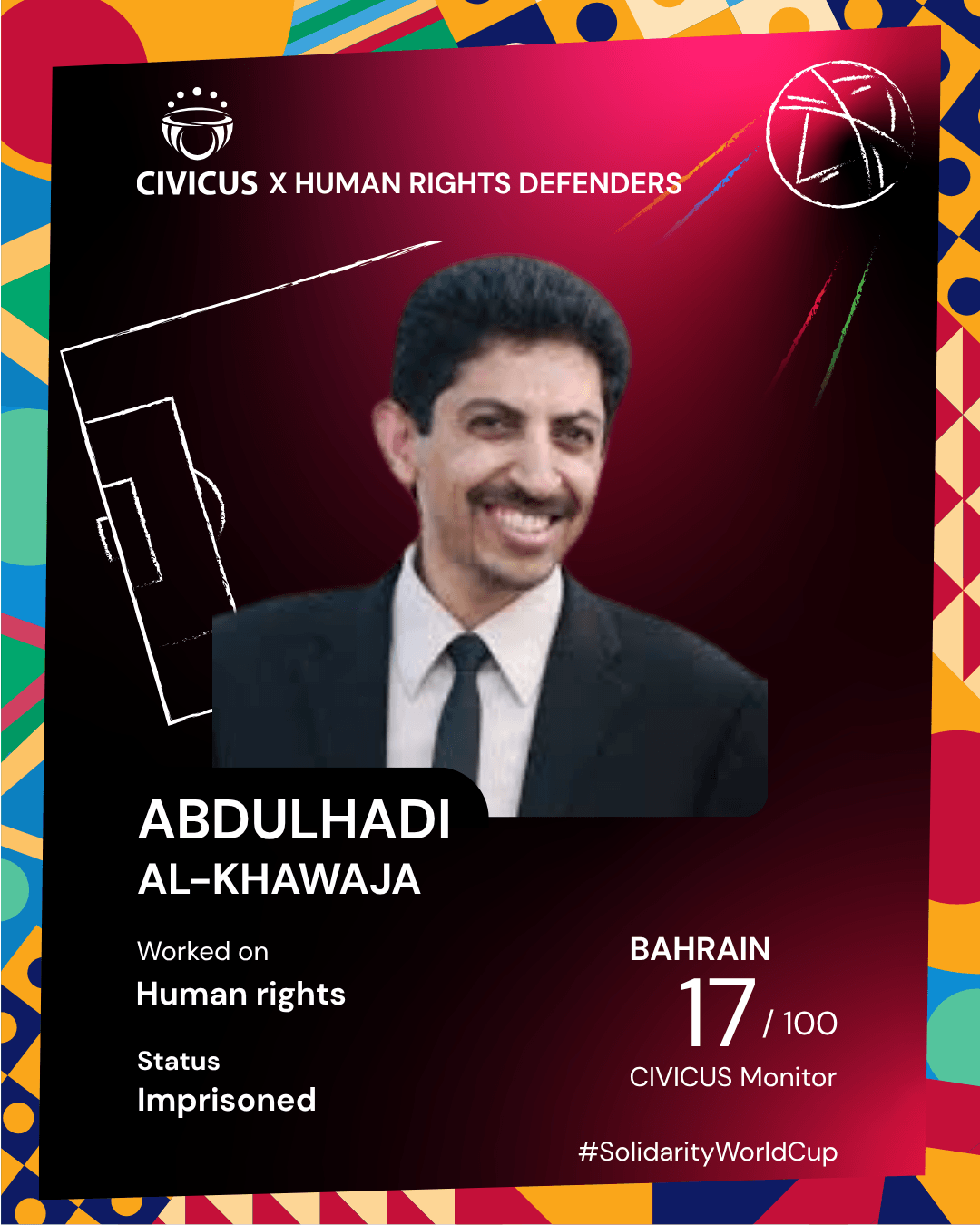
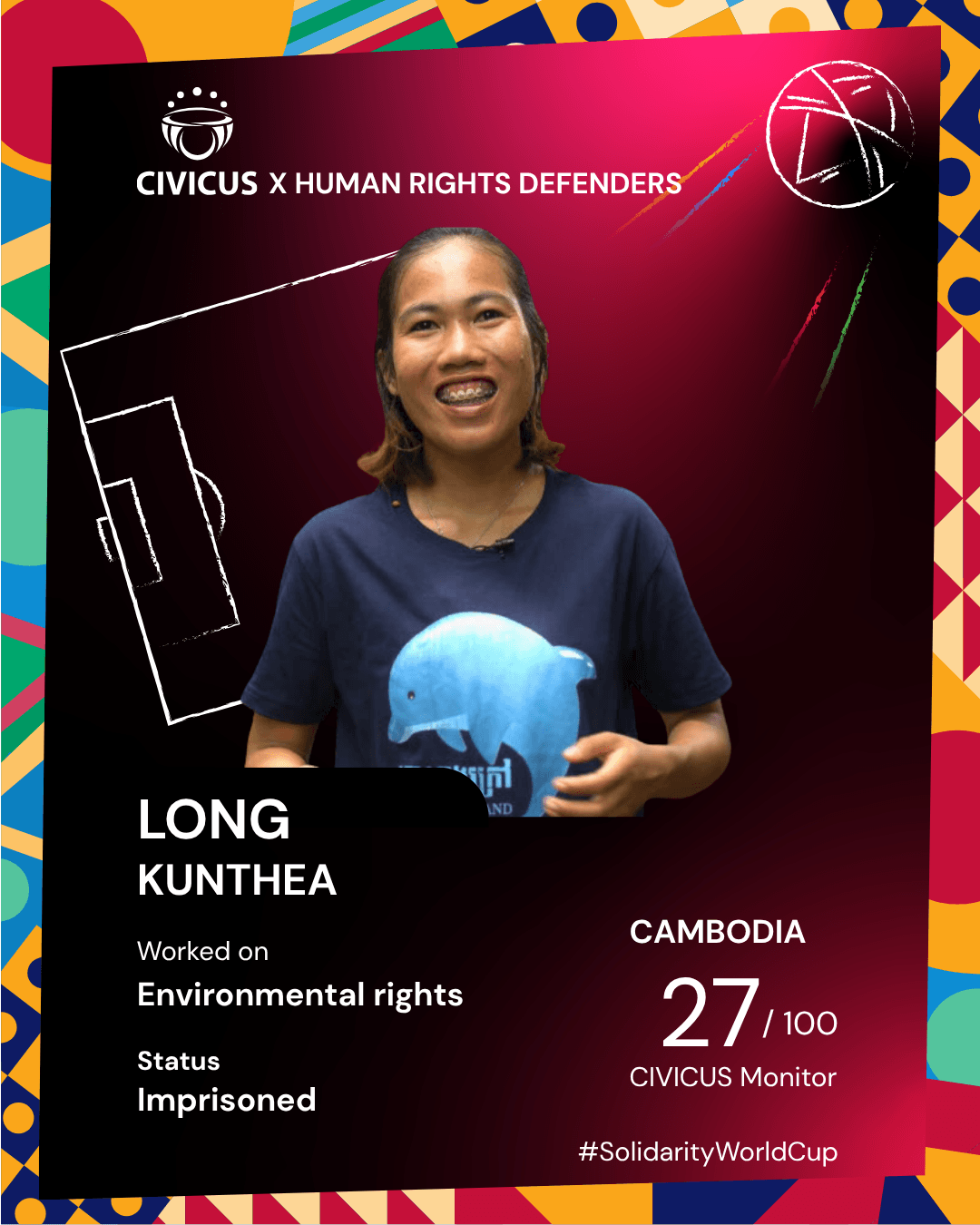
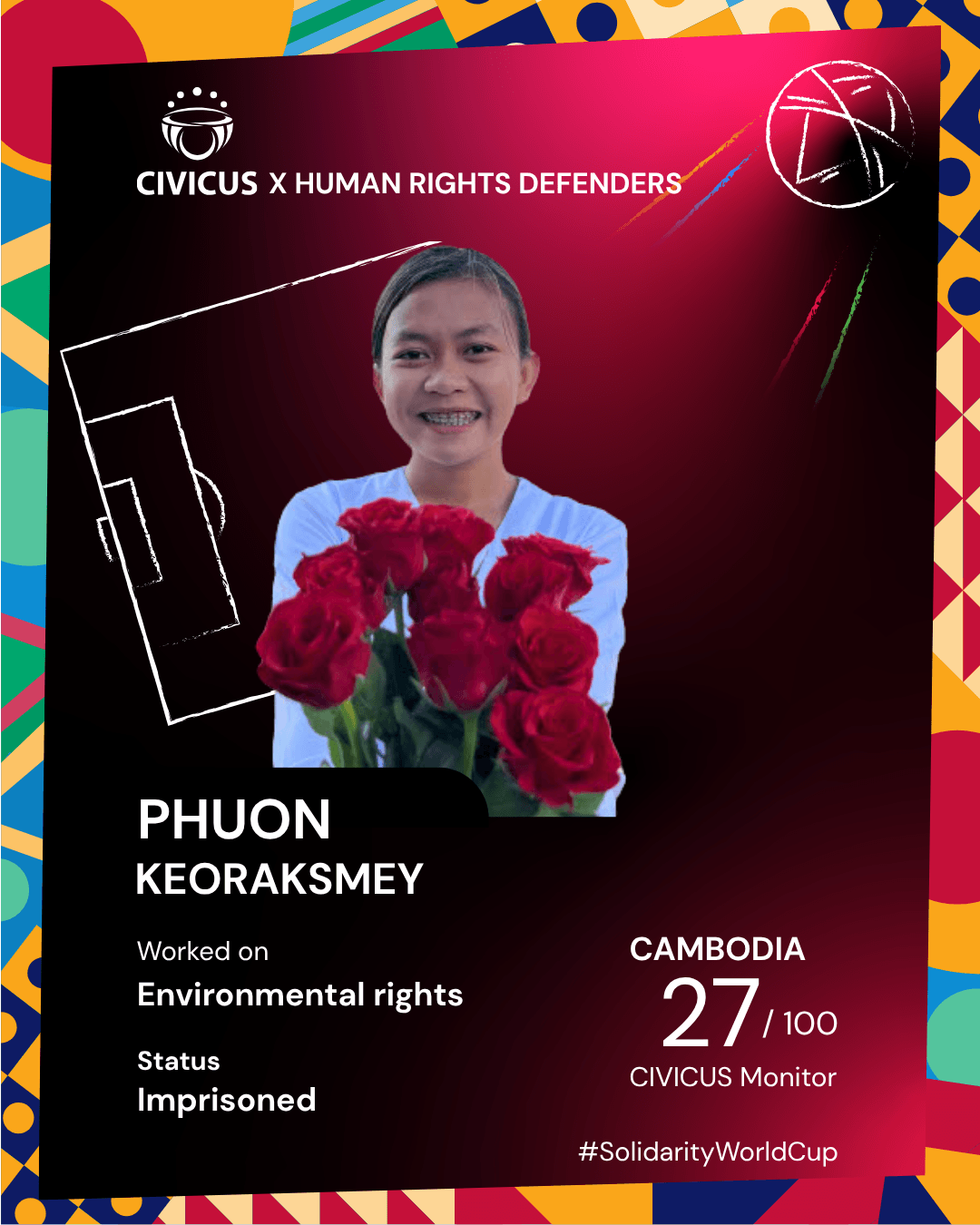
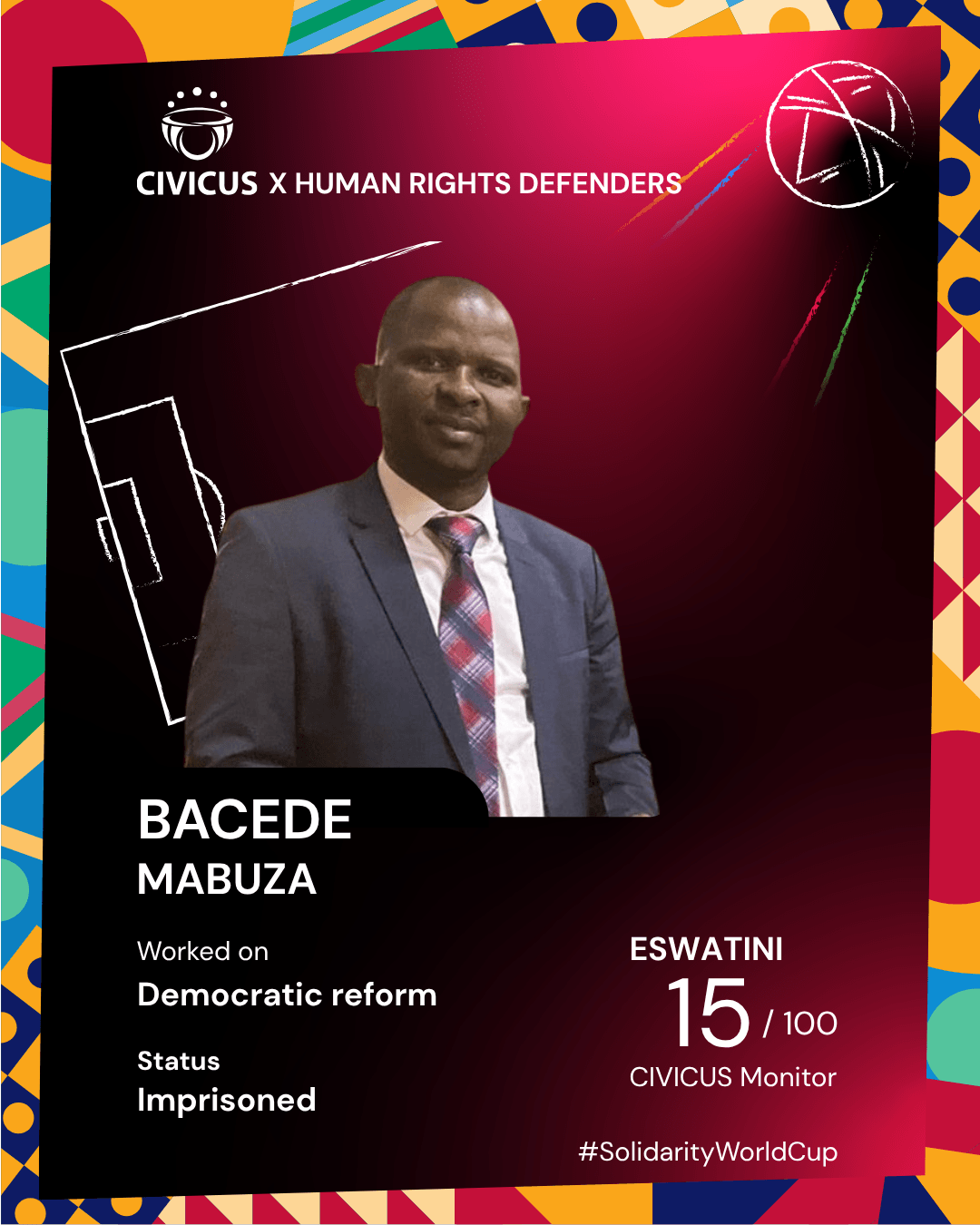
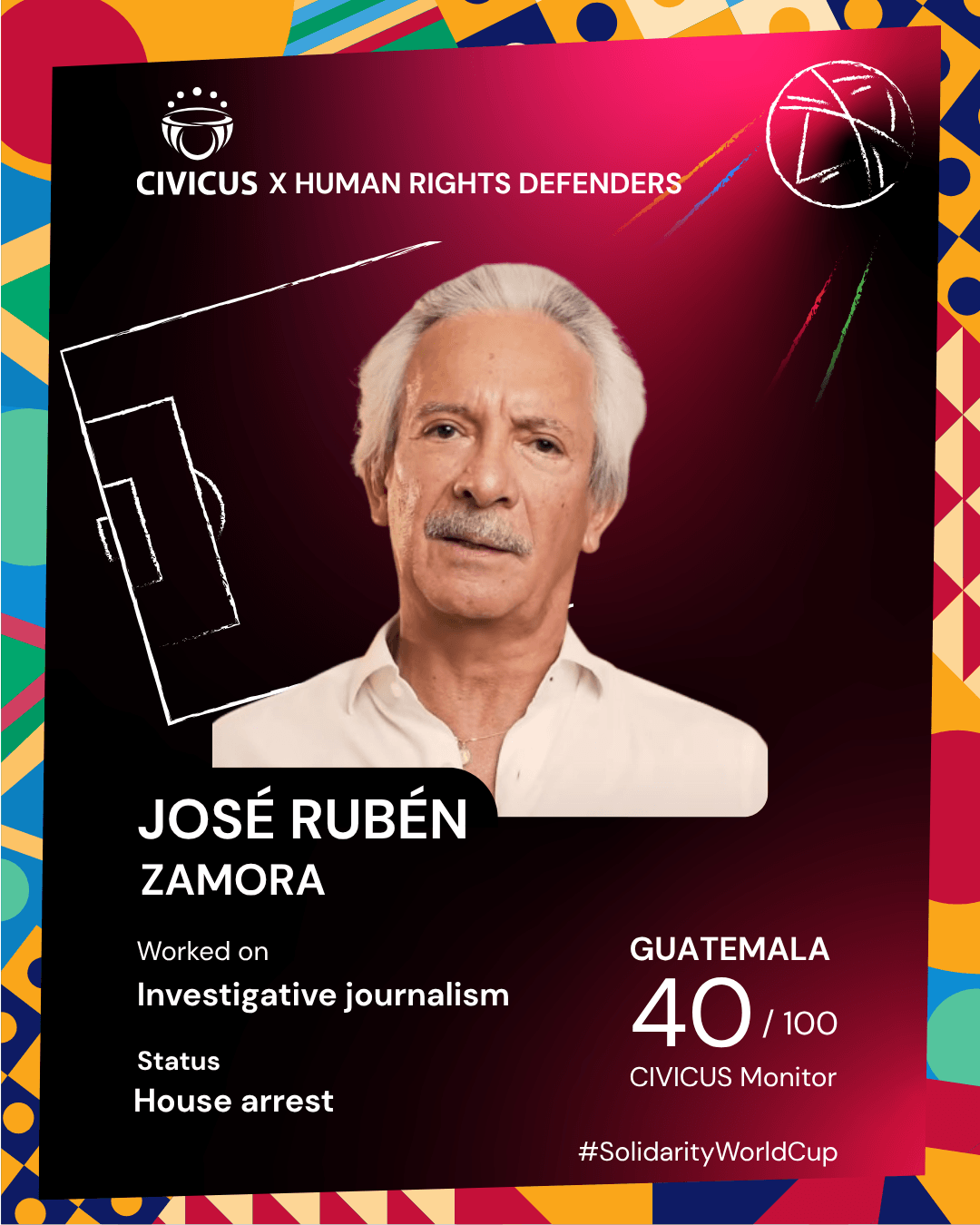
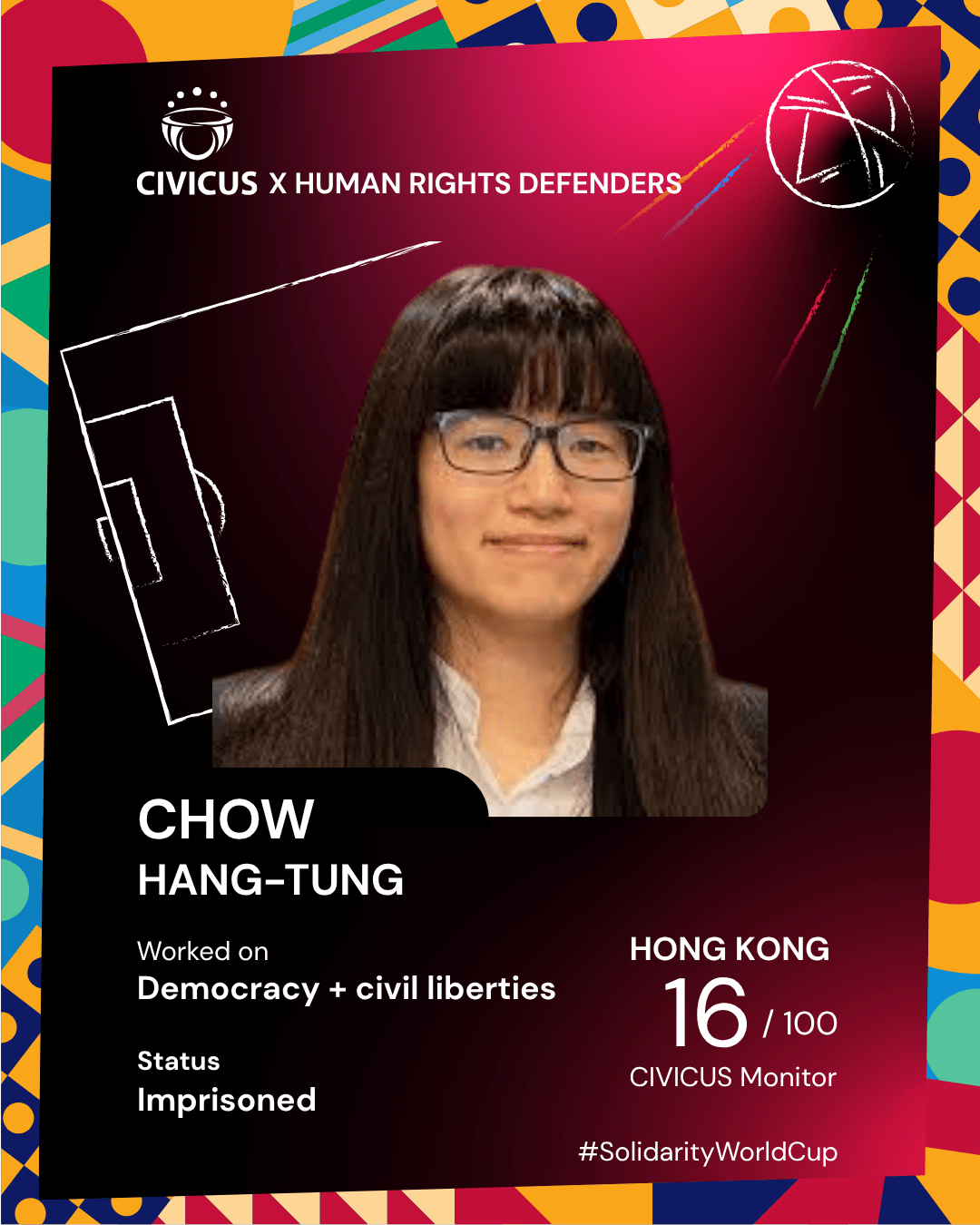
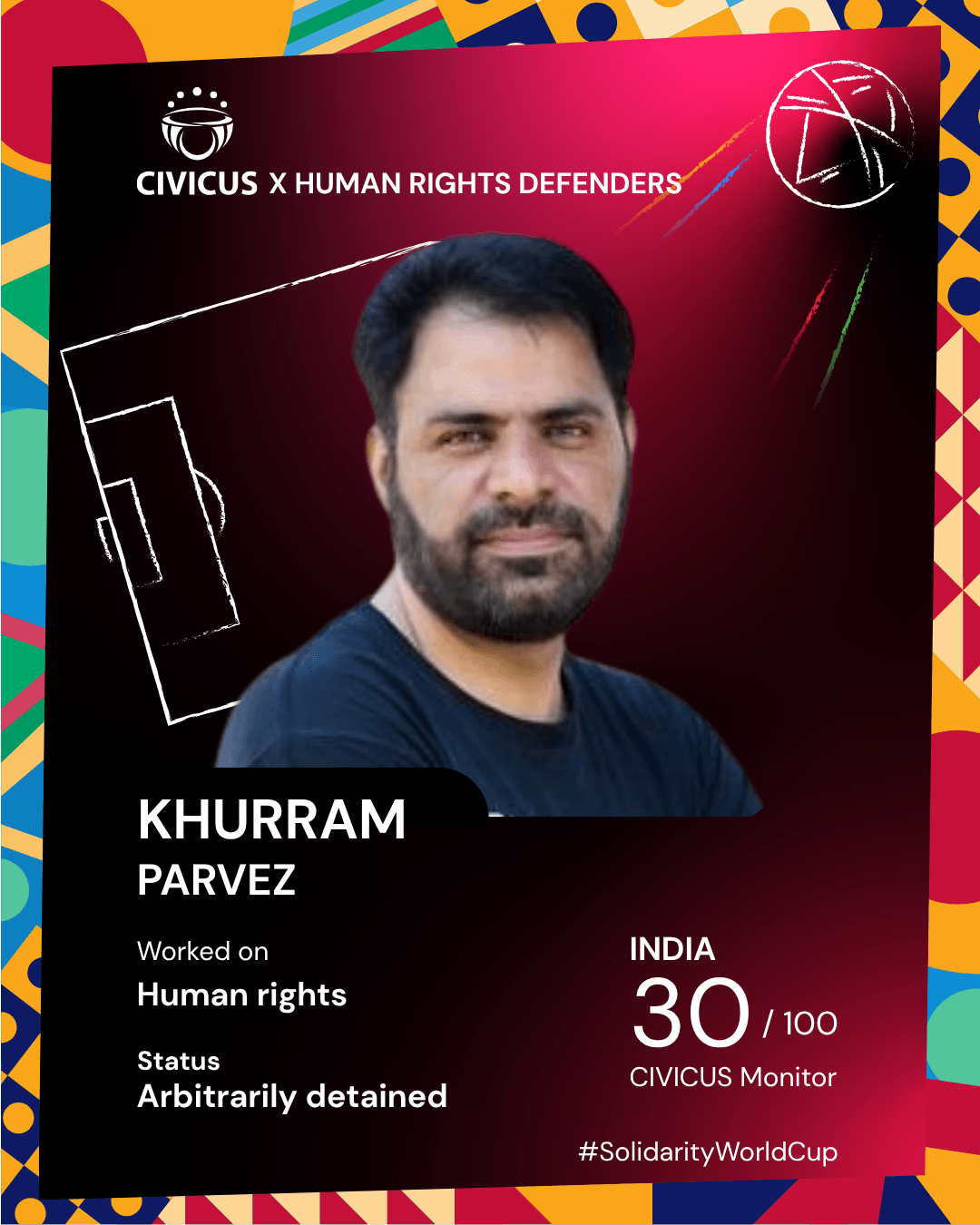
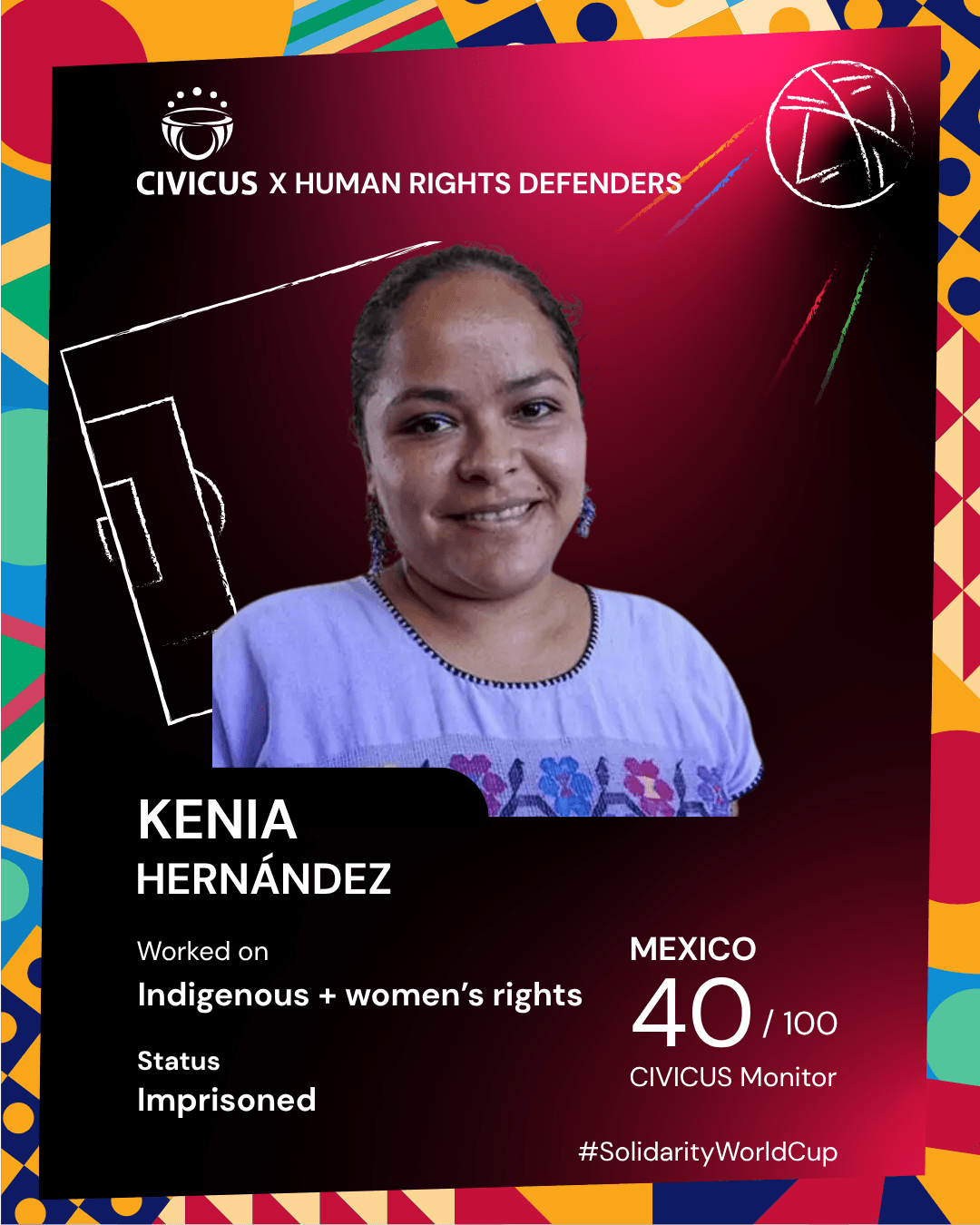

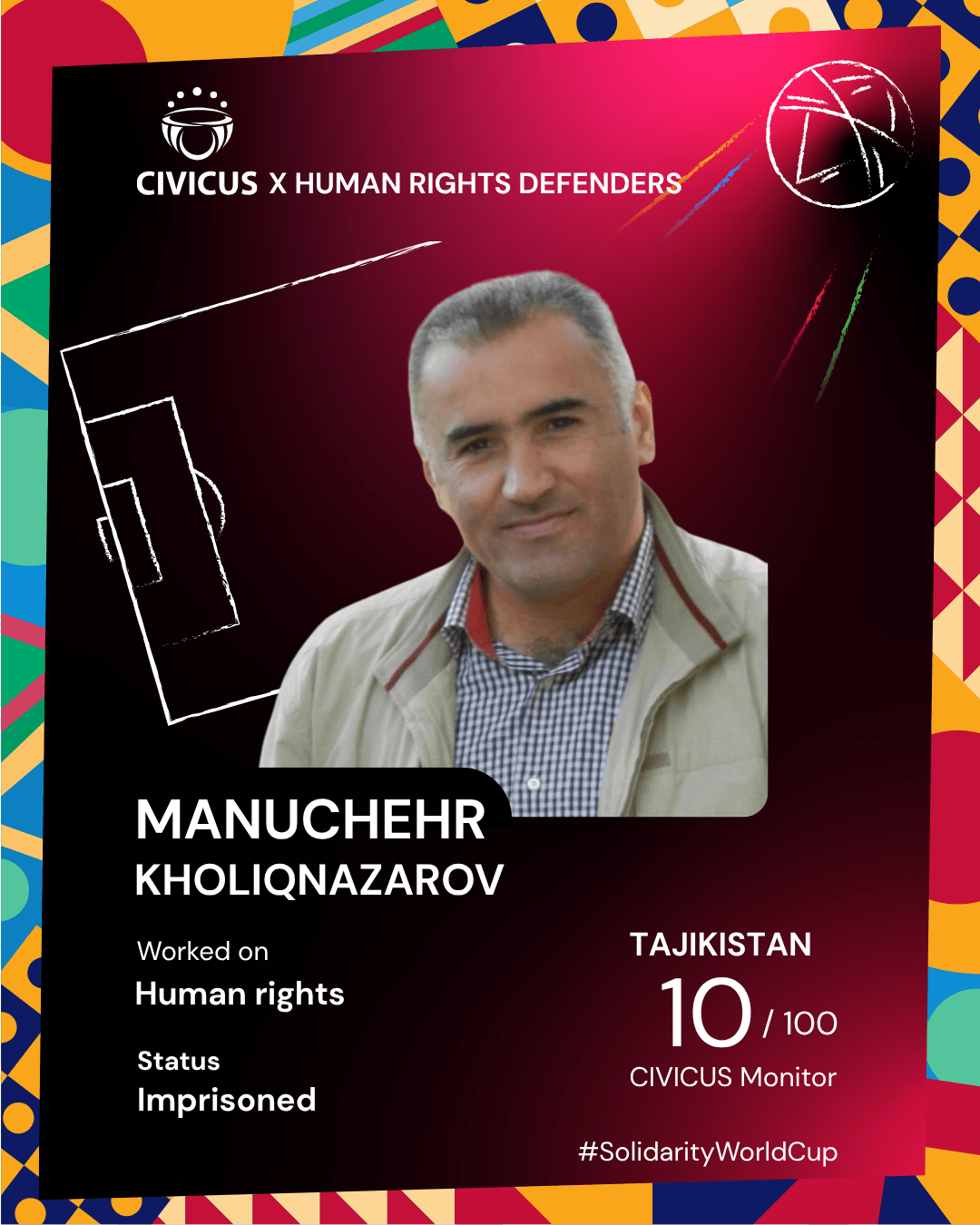
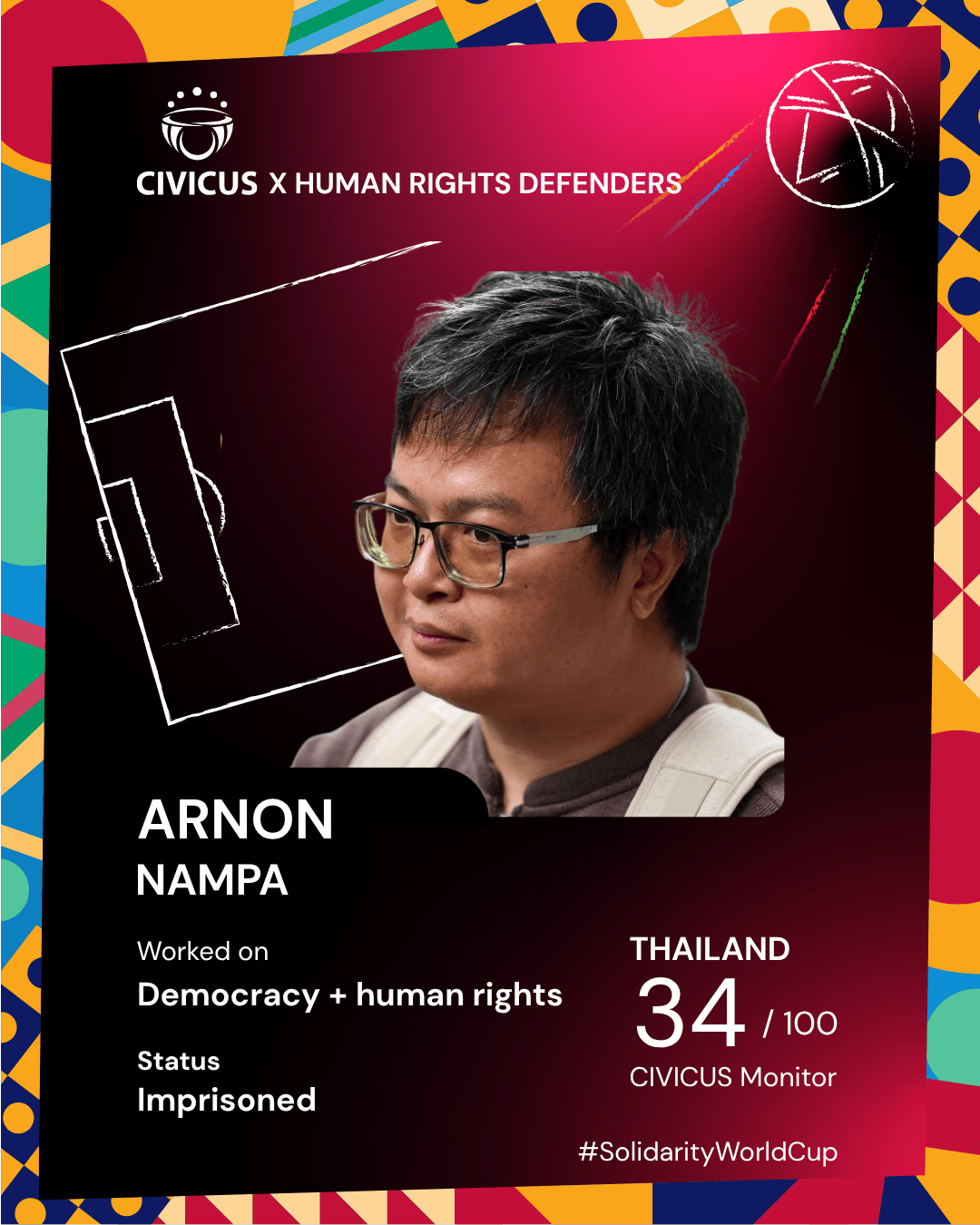
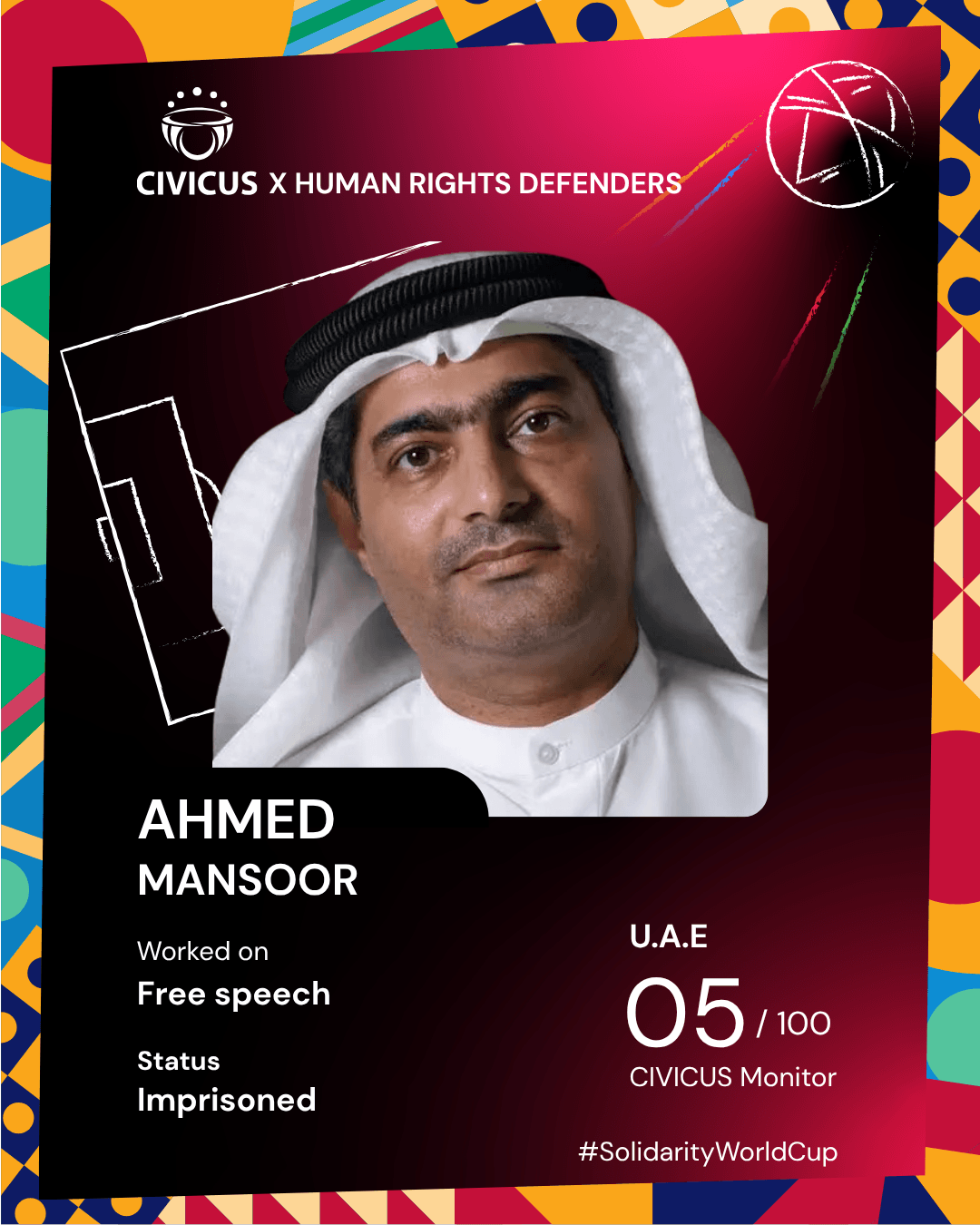
Join the Solidarity Squad
Stand with defenders around the world. Get updates, actions, and campaign news.