


CIVICUS participated in the third CSO-UN Peacebuilding Dialogue held on 10-11 December 2025. It brought together around 200 civil society representatives from 90 countries, selected through a competitive process.
Launched in 2023 in New York, the initiative works with a Core Group of 13 global and regional civil society networks and strengthens collaboration on Women, Youth, and Peacebuilding. This includes 7 United Nations (UN) entities.
Theme and Purpose
The 2025 Dialogue focused on using a “Holistic systems approach to peacebuilding into practice.” The Dialogue integrated Women, Peace and Security (WPS) and Youth, Peace and Security (YPS) embedded as cross-cutting priorities.
The CSO–UN Dialogue is a joint UN–civil society process, which:
- creates a dedicated platform for diverse civil society actors, particularly from the Global South, to influence global peacebuilding priorities;
- helps the UN engage more consistently and meaningfully with civil society to build and sustain peace; and
- fosters multistakeholder collaborations for the implementation of the Pact for the Future.
Why the Dialogue took place in Geneva
The UN Department of Political and Peacebuilding Affairs (DPPA) and the Peacebuilding Support Office (PBSO) organised the dialogue, in collaboration with the Martti Ahtisaari Peace Foundation. The Dialogue was held in Geneva for the first time. The organisers chose Geneva to reflect the growing links between the UN’s peacebuilding work and the UN’s human rights system, and to support broader efforts to inter-connect policy areas. Peacebuilding is deeply intertwined with the UN’s human rights pillar, acting as a crucial component of all three UN’s foundational pillars: Peace and Security, Human Rights, and Development.
What the initiative does
Each year, civil society peacebuilders meet with UN representatives to:
- discuss challenges and opportunities for meaningful civil society - UN partnerships on peacebuilding,
- identify practical ways to work together at global and country levels, and
- develop actionable recommendations.
Between annual meetings, the initiative sustains engagement throughout the year. It develops a standing forum for UN-civil society-Member State exchange on peacebuilding. 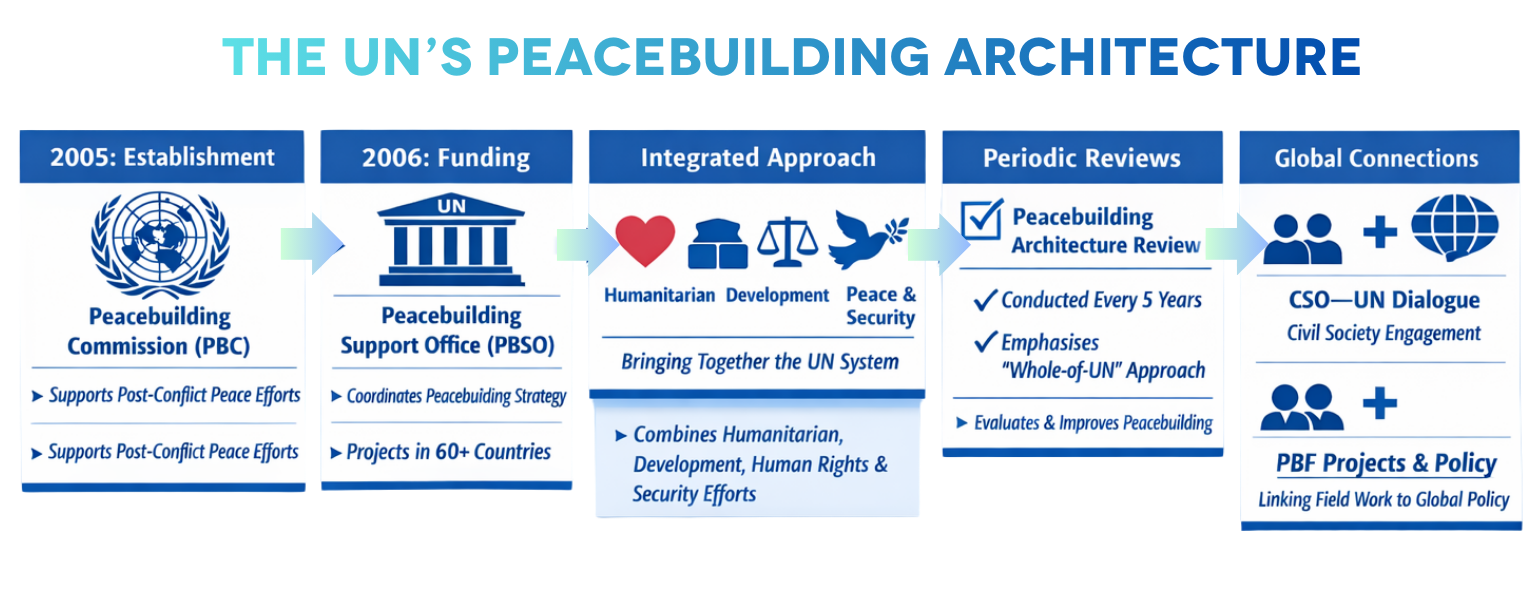
CIVICUS position: civil society and peacebuilding financing
The Dialogue is a space for civil society to exchange views with UN peacebuilding bodies. CIVICUS’ highlighted the following priorities and recommendations:
1) Put local ownership at the centre
Peacebuilding is more than conflict resolution. It is about creating conditions for societies to thrive without the threat of violence. It requires local ownership, inclusive participation, and coordination across multiple sectors, from development to human rights to security. Local civil society actors such as women, margnialised groups and youth-led initiatives are critical. They understand community dynamics, can mediate disputes, foster dialogue, and strengthen social cohesion.
2) Strengthen UN–civil society partnerships where they matter
Partnerships between the UN and civil society strengthen peacebuilding architecture. These collaborations allow the UN to leverage local knowledge, enhance outreach, and design context-relevant initiatives. When structured thoughtfully, they:
- create a mutually reinforcing relationship where civil society gains access to resources, networks, and platforms. The UN benefits from legitimacy, on-the-ground intelligence, and operational insights; and
- allow country and regional UN offices to work directly with local actors ensuring that partnerships are responsive, flexible, and informed by local realities. The UN will provide guidance, coordination, and strategic support.
3) Fix peacebuilding financing so it reaches local actors
Historically, peacebuilding financing has been fragmented, difficult to access, and often short-term. Women’s organisations and youth-led groups face disproportionate barriers. Insignificant percentages of bilateral aid in conflict-affected countries reaching women’s organisations. Youth-led groups often operate on budgets under USD 5,000 per year even before the 2025 funding crisis.
CIVICUS calls for reforms that:
- expand direct support to local actors, including women and youth-led organisations;
- make funding innovative, flexible, and long-term (including grant cycles beyond 18 months to allow for relationship-building and sustained impact),
- streamline bureaucratic processes, increasing transparency; and
- apply context-sensitive risk approaches that do not exclude local groups.
4) Protect civic space and youth participation
Civic space and youth participation must remain central to peacebuilding. Protecting these spaces enables local actors to operate effectively and ensures that peacebuilding efforts are locally owned, rights-based, and inclusive.