


indigenous peoples' rights
-
MEXICO: ‘When climate activism threatens powerful interests, it is labelled on the same level as terrorists and drug traffickers’

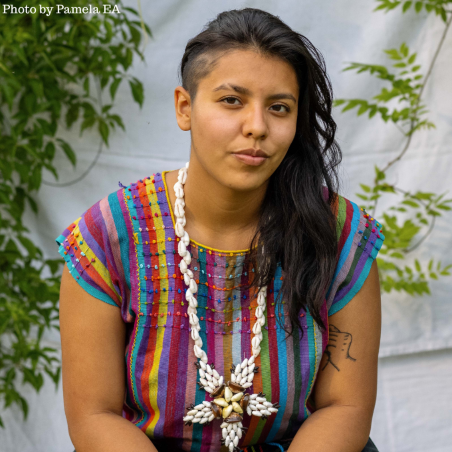 CIVICUS speaks about the role of civil society and its expectations for the upcoming COP28 climate summit with María Reyes, a young human rights and environmental activist from the Mexican state of Puebla.
María is part of the Indigenous Figures (Futuros Indígenas) collective, made up of peoples, including young people, from Mexico and Central America. She participates in the global south division of Fridays for Future (FFF), an organisation that fights for environmental justice and advocates for action in the face of the climate emergency.
What are Mexico’s main environmental problems?
Generally speaking, Mexico is very vulnerable to the climate crisis. Water scarcity is a central issue, partly caused by droughts, but also by infrastructure problems, as many people do not have access to piped drinking water, and by very poor distribution and overexploitation of aquifers by private companies. If we add to the existing drought the fact that in many communities there are companies that obtain concessions through non-legal and non-transparent means and appropriate the little water that is left, the situation for people becomes unbearable.
Mexico is one of the most dangerous countries to be an activist and environmental defender. In the southeast of Mexico there is a series of transnational extractive megaprojects, such as the Interoceanic Corridor and the ‘Mayan Train’, which threaten the environment through logging and water extraction, and displace wildlife, expropriate territories and resources, harm people and commit human rights violations. Local communities, particularly Indigenous communities, are criminalised when they oppose these megaprojects that are imposed on their territories without any consultation and without their consent or through the staging of rigged consultations.