By Trisha Alexis De Leon
Recent global crises have magnified the gaps in the global development architecture—deficits which especially impacted under-represented and marginalised communities, reflecting the power imbalances and colonial biases that continue to shape whose knowledge, leadership, and solutions are valued. These challenges have prompted important conversations about resilience, agency, and sustainability. However, self-reliance should not be understood as communities being left to fend for themselves. Rather, it requires strengthening local capacities, relationships, and collective power so that communities can shape responses to the issues that affect them, drawing on their own knowledge, priorities, and realities while remaining connected to broader networks of solidarity and support.
That is why Locally-Led Development (LLD) is crucial if we want to see tangible progress as a society. More and more organisations are coming to that conclusion and supporting programmes by the community, for the community. One of them is CIVICUS’s Local Leadership Labs (LLL). Along with six convening partners in Southeast Africa and Southeast Asia (for the complete list of convening partners, click here), it tackles the barriers that get in the way of local leadership. To further understand LLL, take a look at the video below.
By laying the groundwork, LLL’s initiatives can prosper in the long-term. The programme’s impact can already be felt, as observed in its prototypes:
1. Knowledge Infrastructure and The Philanthropy Hub
The Knowledge Infrastructure prototype is a knowledge management system to curate Africa Philanthropy Network’s institutional knowledge into an accessible, living library for members. The Philanthropy Hub transforms fragmented resourcing into locally rooted funding ecosystems, building domestic philanthropy strategies, supporting donor mapping and advocacy, and strengthening local fundraising capacity.
2. Co-Creation Infrastructure
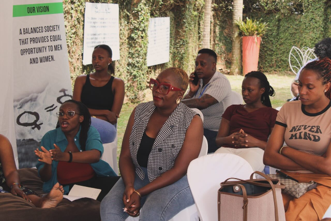
CAPAIDS’s prototype operates at two levels simultaneously: a national participation infrastructure and community-level solutions generated within it. Co-convenors in 10 districts and 3 cities facilitated communities to identify priorities, analyse root causes, and design testable responses.
 3. Akar Daya
Akar Daya (Rooted Power) is Indonesia untuk Kemanusiaan’s (IKa) programme which provides a playground for local actors to hone their solutions-building capacity and cultivate self-reliance. By utilising and maximising their existing resources, Akar Daya helps communities cultivate solidarity and build economic structures that can last beyond external funding.
In action, an Akar Daya workshop in Sragen, Indonesia provided a safe space for participants to enhance their writing abilities. This fundamental skill is crucial to the survival of the area's women-led Jamu culture.
4. EmpowerNet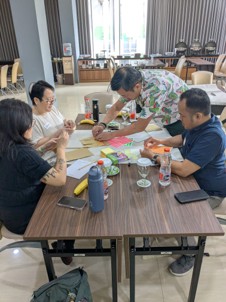
EmpowerNet, developed by Innovation for Change (I4C)’s East Asia Hub, harnesses financial and non-financial resources, enabling actors to explore and lead the implementation of initiatives co-created with their communities.
5. Amplify
Also by I4C East Asia Hub, this programme empowers communities for strategic information dissemination. Not only are local actors in charge of crafting the narratives they want to share, they are also directly involved in strategising how to reach their target audience.
While I4C’s prototypes are in their early stages, these initiatives can significantly help local communities that are under-resourced and under-supported. Support from civil society actors can greatly contribute to materialising I4C’s vision.
6. Structural Legal Aid Training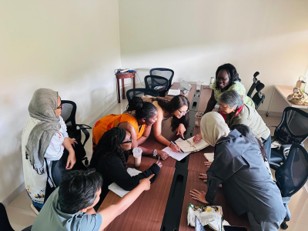
This prototype by Trend Asia Indonesia breathes new meaning into legal aid. Grassroots communities learn to analyse power and how the law is used against them structurally. Being equipped with this knowledge allows local actors to stand on their own, organise collectively, and act strategically.
Beyond LLL, Trend Asia’s support is already in action. In February 2026, Clean Indonesia Coalition filed a case against Energy and Mineral Resources Minister Bahlil Lahadalia for favoring fossil fuels. The coalition, joined by impacted residents as plaintiffs, pointed out procedural and structural flaws in the documents that the minister endorsed.
7. Global Solutions Lab
Last but not the least, the Global Solutions Lab. The convening, hosted by CIVICUS in Bangkok, Thailand in May 2025, served as a platform for activists, funders, and other key actors to come together and co-create a new and innovative approach to resourcing.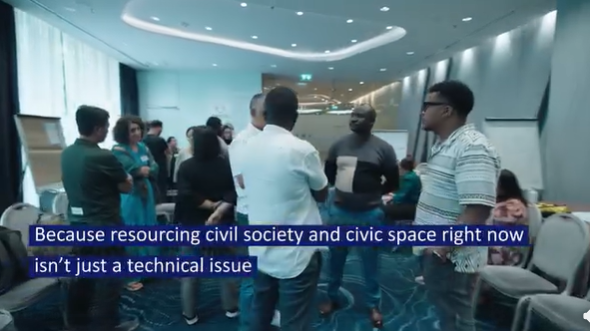
In CIVICUS's latest event with the Asia Democracy Network (ADN), the International Civil Society Week 2025 (ICSW 2025), over 700 participants came together and urged institutions and organisations to stand for democracy and civic freedoms. While the function was more large-scale than the previous prototypes, it is nonetheless rooted in a basic truth: that civic freedoms cultivate shared power and accountability—principles which guide LLL.
Whether large or small in scale, the goal of the LLL prototypes remains the same: to create the conditions for LLD initiatives to thrive and drive meaningful change. This requires collaboration, trust, and a commitment to shifting power so that communities are not simply consulted, but are active partners in shaping the decisions that affect them.
Locally led change is built through relationships and ownership. When local communities can participate meaningfully throughout the process, from identifying priorities and designing solutions to implementation and learning, programmes and policies are more likely to be relevant, responsive, and rooted in local realities.
This is where the Local Leadership Labs come in. Through collaboration between CIVICUS and its convening partners, the initiative brings together diverse actors, experiences, and forms of advocacy to strengthen local leadership and contribute to a broader movement for a more meaningful, transformative, and locally led civil society ecosystem.
Building more locally led systems is not a straightforward process. It requires ongoing reflection, learning, unlearning, and adaptation from all of us. It also requires patience, trust, and a willingness to challenge long-standing assumptions about where expertise and leadership reside.
While the journey is complex, it is essential if we are to create transformative change that is shaped by the realities, priorities, and aspirations of communities themselves.
Download our latest compendium
Explore various prototypes turning Locally-Led Development into action, co-created by our partners, Femme Forte Uganda, Trend Asia, CAPAIDS Uganda, Indonesia untuk Kemanusiaan (IKa), the African Philanthropy Network (APN), and Innovation for Change – East Asia.